Nyheter

Bondtech

/

News

Events

Learn

News

Team

Products

Sharing

Stories

NEWS

All Duties Included at Checkout for US Customers

A smoother shopping experience for our customers in the US We’re happy to share an update that makes shopping with us even easier. To improve clarity and peace of mind for our US customers, we’ve updated our checkout so that import duties are now included at checkout. This means the [...]

NEWS

New Currency Exchange Policy

Bondtech INDX LEARN NEWS

What IN means, in Bondtech INDX

We unveil more about the Bondtech INDX. What IN means? It relates to a couple of technologies at the core of the INDX's multi-tool capacity.

Bondtech INDX LEARN NEWS

What DX means, in Bondtech INDX

Today we unveil a bit more about the Bondtech INDX. We explain what the DX means, and what is it all about.

Trash it or Read it. Just never miss what is important to you.

Join us in this journey and subscribe to our newsletter to get the latest insights right in your mailbox.

Latest Posts of the Bondtech Blog

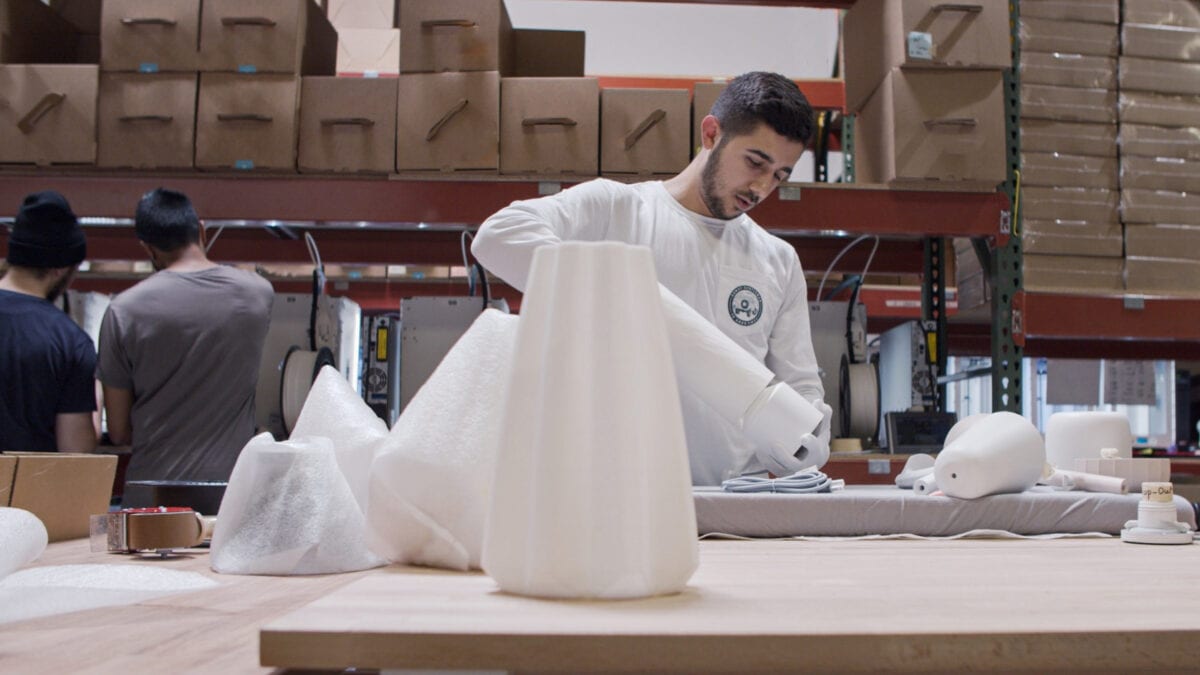
Gantri Adopts Bondtech BMG™ Extruder Upgrades at their 3D print-farm

Gantri is the world’s first digital manufacturer for designer lighting.

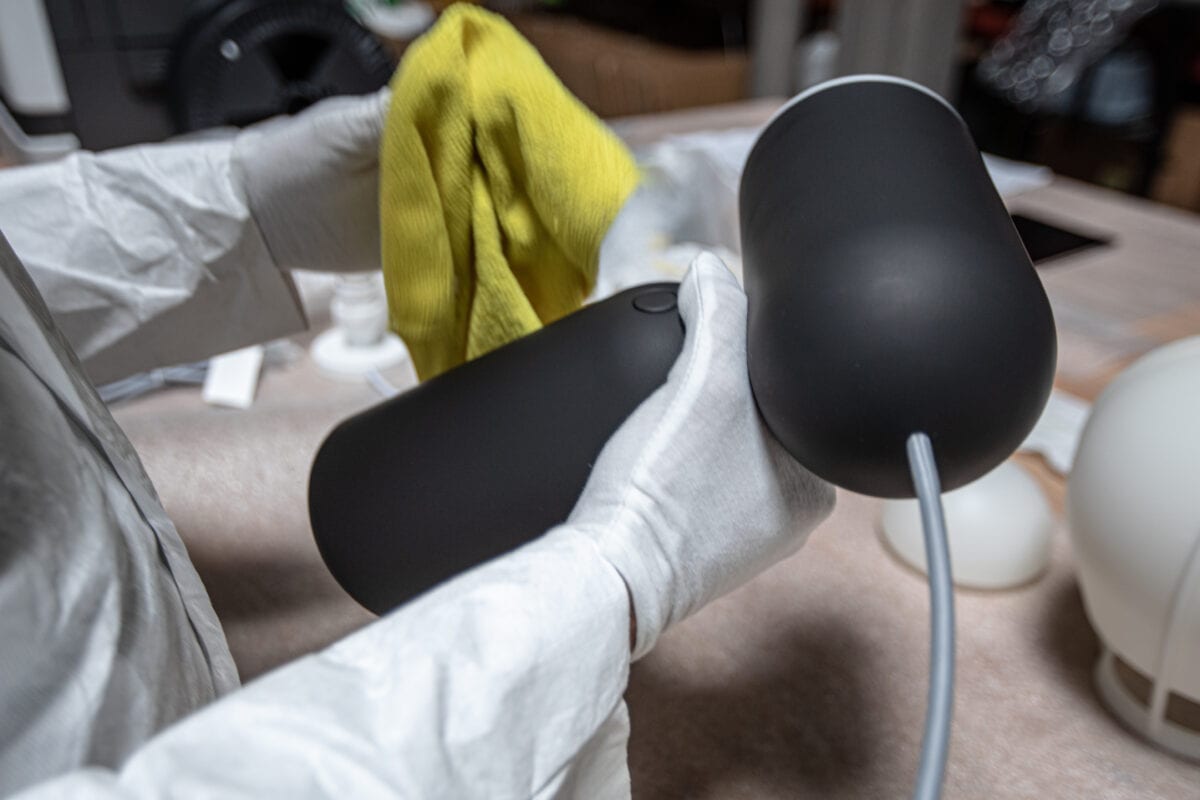
Gantri has completely reimagined the way lighting is developed, made and sold, empowering the world’s best designers to create design-forward, functional pieces for your life. They have disrupted a traditional industry and changed the way production is done.

Visit Gantri's website

Gantri has built a next-generation factory that uses cutting-edge 3D printing technology to produce luxury-quality products without industrial inefficiencies which results in great design that is more sustainable and more attainable.

The luminaires are printed using FDM technology with plant-based PLA, making the lights durable and great for the planet.

At Bondtech we applaud Gantri for such endeavour.

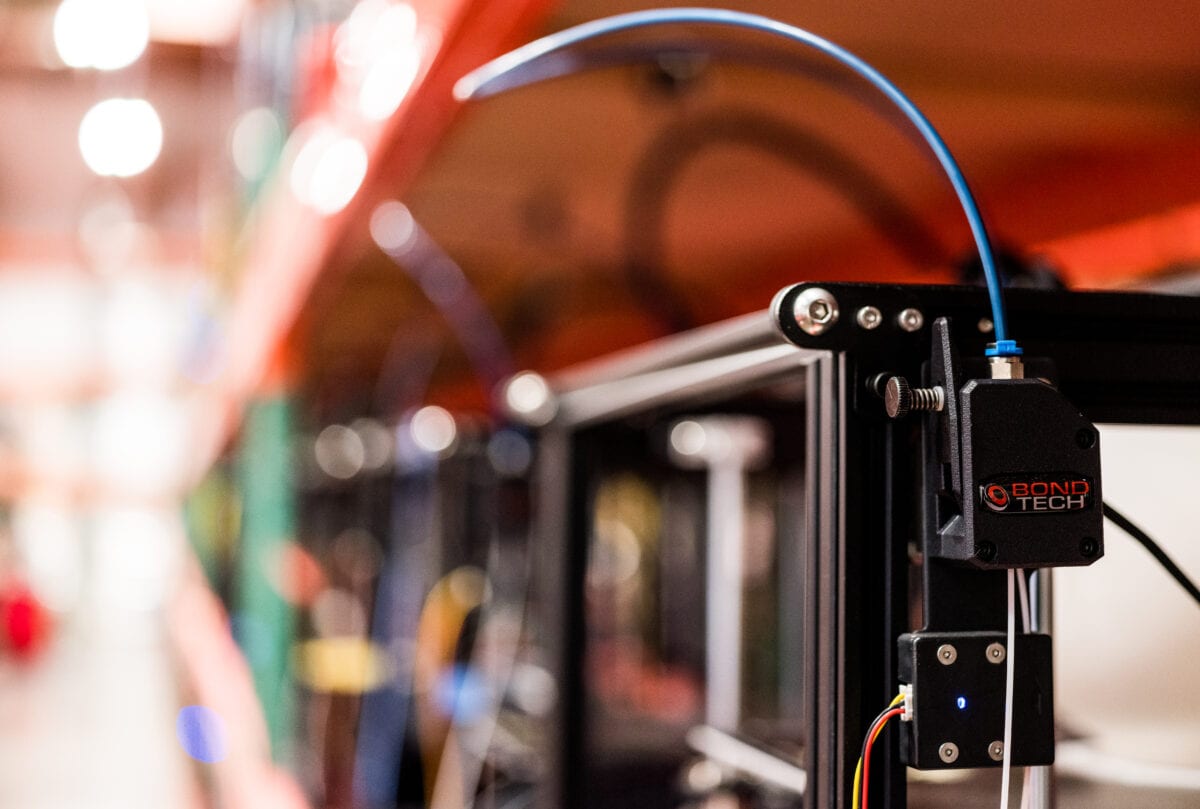
Some time ago Bondtech was put to the test by Gantri. The BMG™ extruder passed and was adopted. Bondtech’s Reliability and Performance never meant so much.

At Gantri’s print farm in California, production is assured by hundreds of 3D printers, more and more of them being upgraded with Bondtech BMG™ extruders.

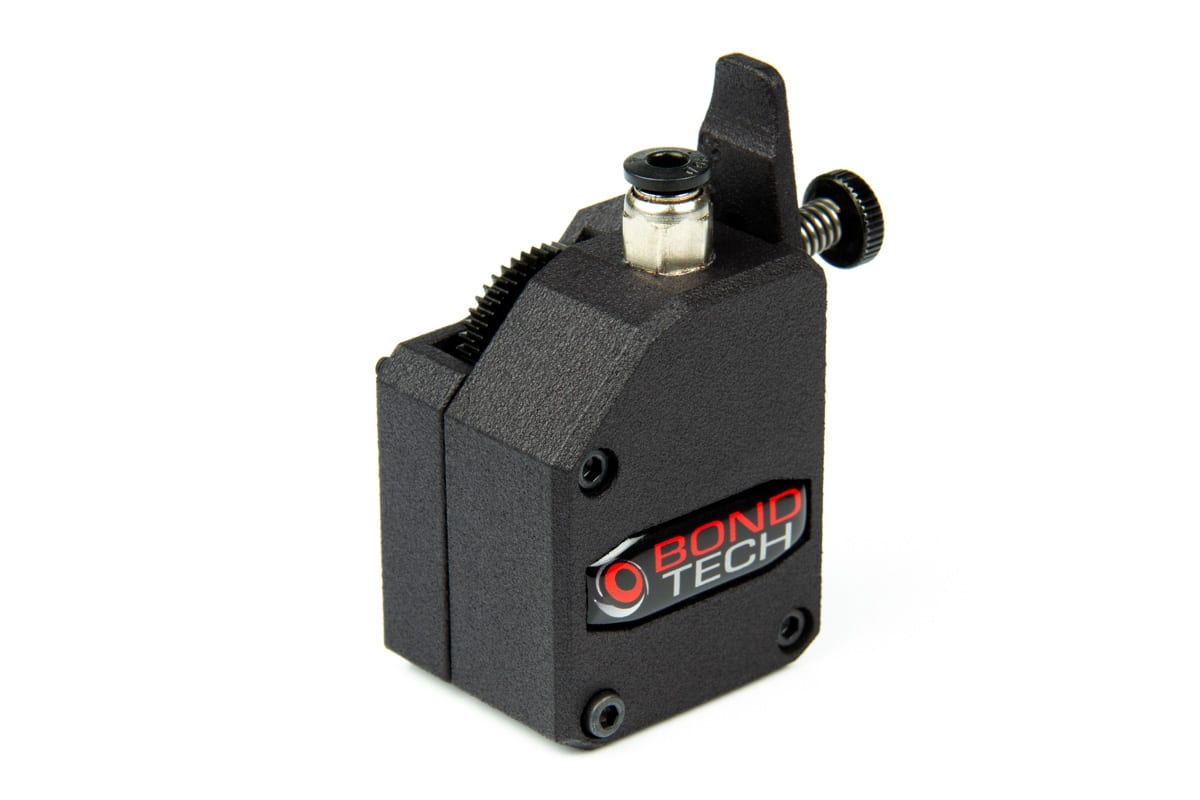
About The Bondtech Mini Geared BMG™ Extruder

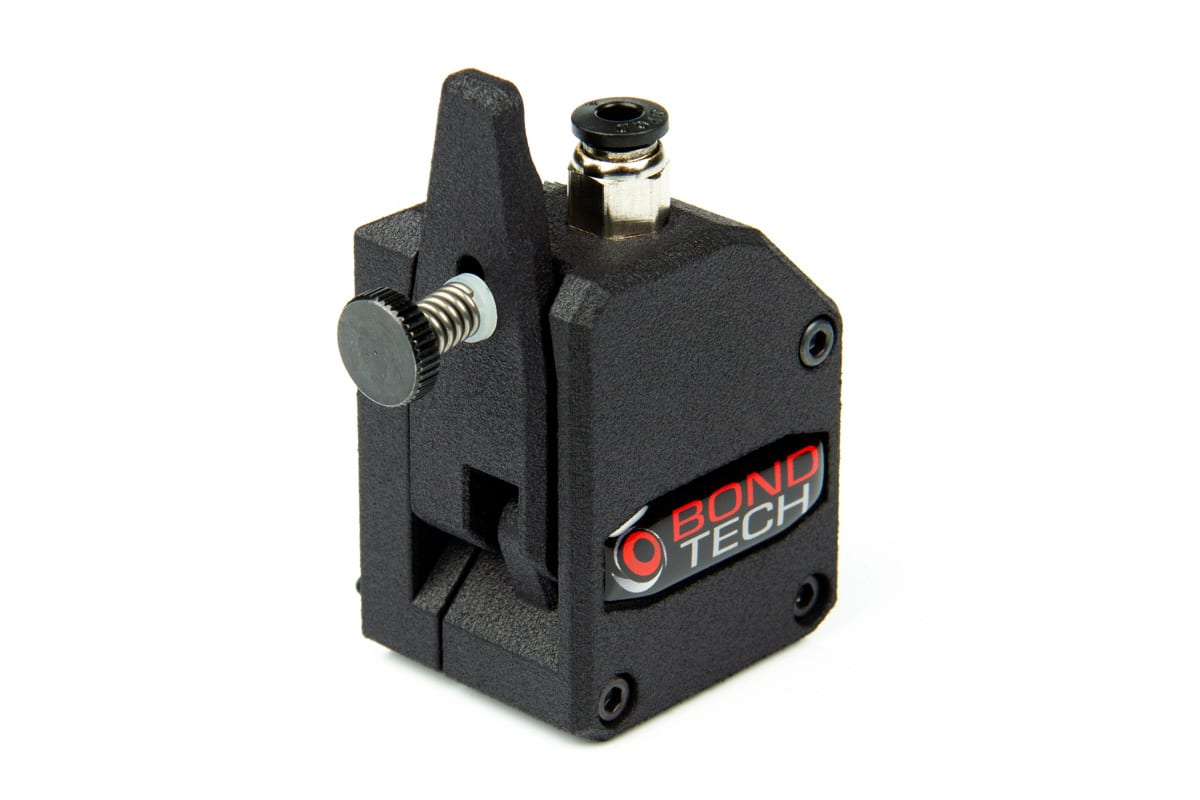
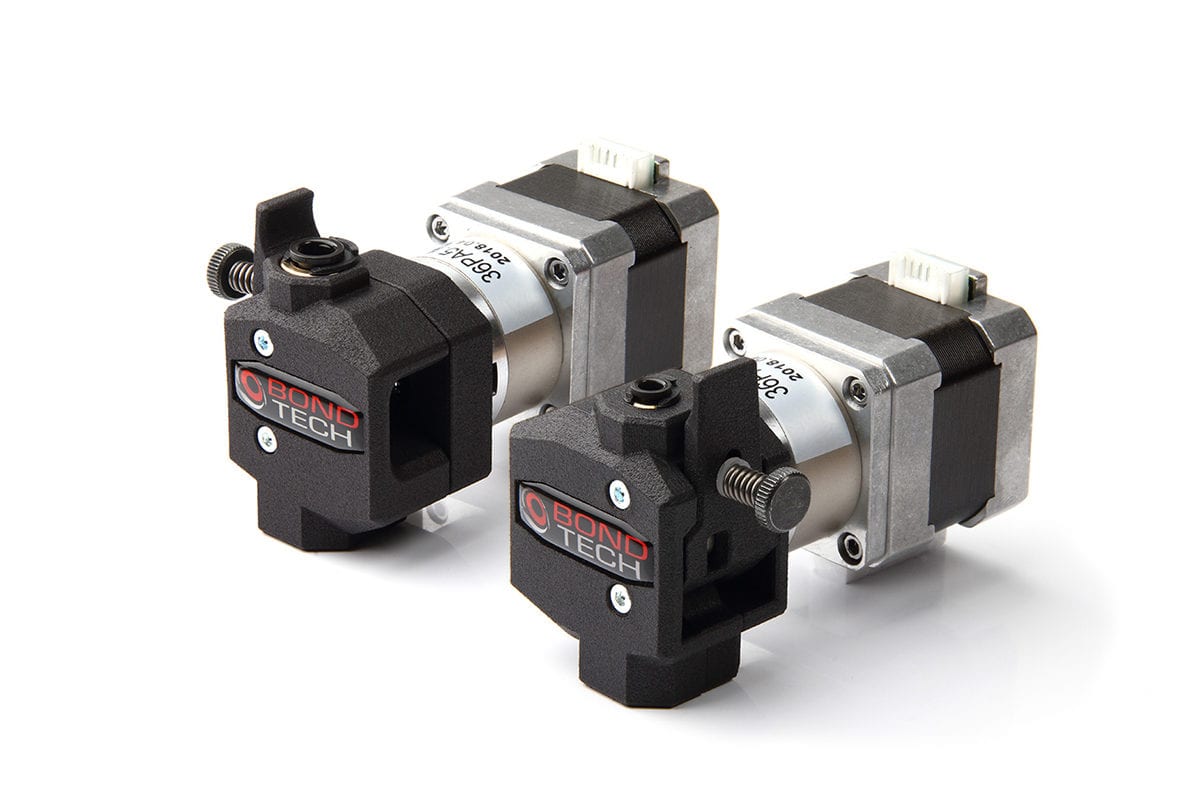
The Bondtech BMG™ Extruder has two variants, left hand and right hand. The BMG™ extruder replaces the original extruder and mounts in the same position, making the installation very easy and fast with minimal effort.

These kits offer a higher performance extrusion system because they are enabled with our Dual Drive technology, providing slipping free and deformation free material feeding. The adjustable tension allows you to finetune the setting for different filaments.

The housing parts are professionally 3D printed in polyamide for maximum strength and precision.

Click here to buy this or other extruders at our shop
Want to know more?

Register yourself or login to leave a Question, Reply or Comment in the section below.

If you didn't already, you can also subscribe to our newsletter to receive the short updates about our new products, updates or technology on your mailbox.

Thank you : )

BMG, Mirrored or Standard? That is the question.


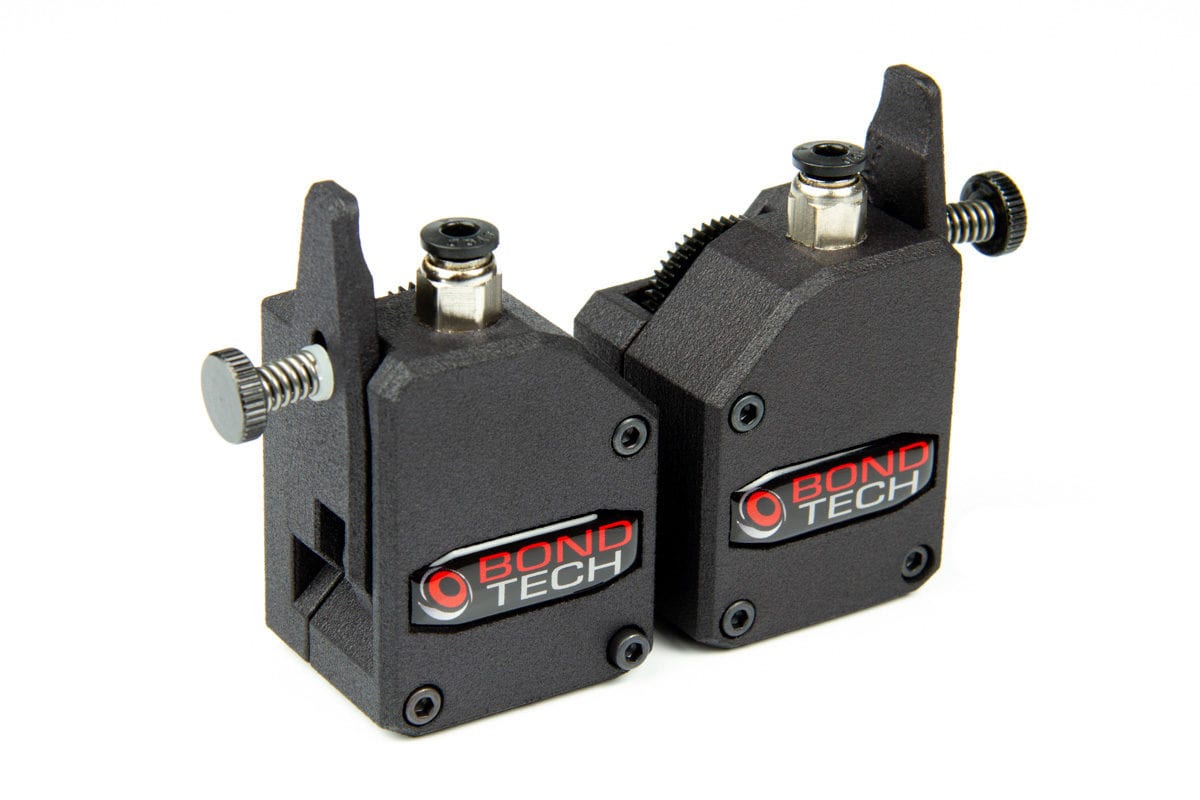
What is the difference between a Standard BMG™ and a Mirrored BMG™?

Many people ask us what is the difference between the standard and the mirrored BMG™.

We are also asked a lot about what version should be chosen to use with specific 3D printer models.

Today we want to adress that and give a detailed explanation.

There are two main differences between the standard and mirrored versions ->


when facing the Bondtech logo

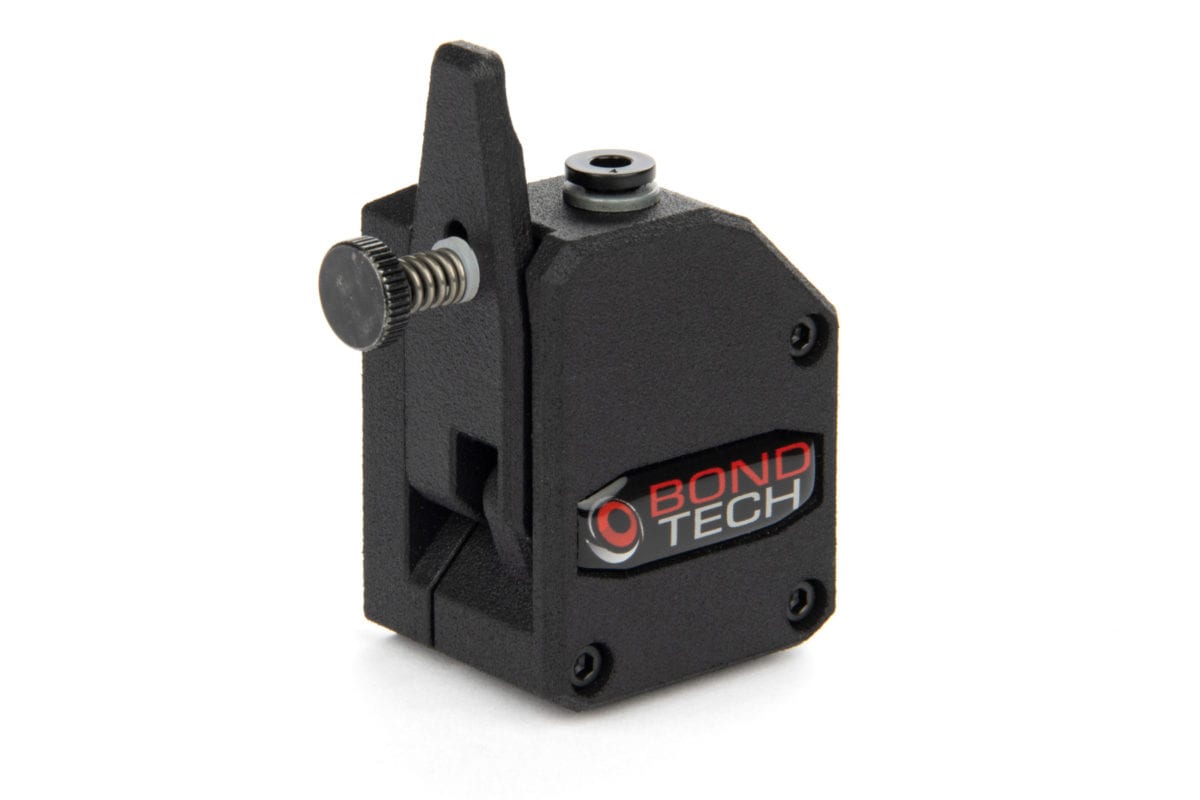
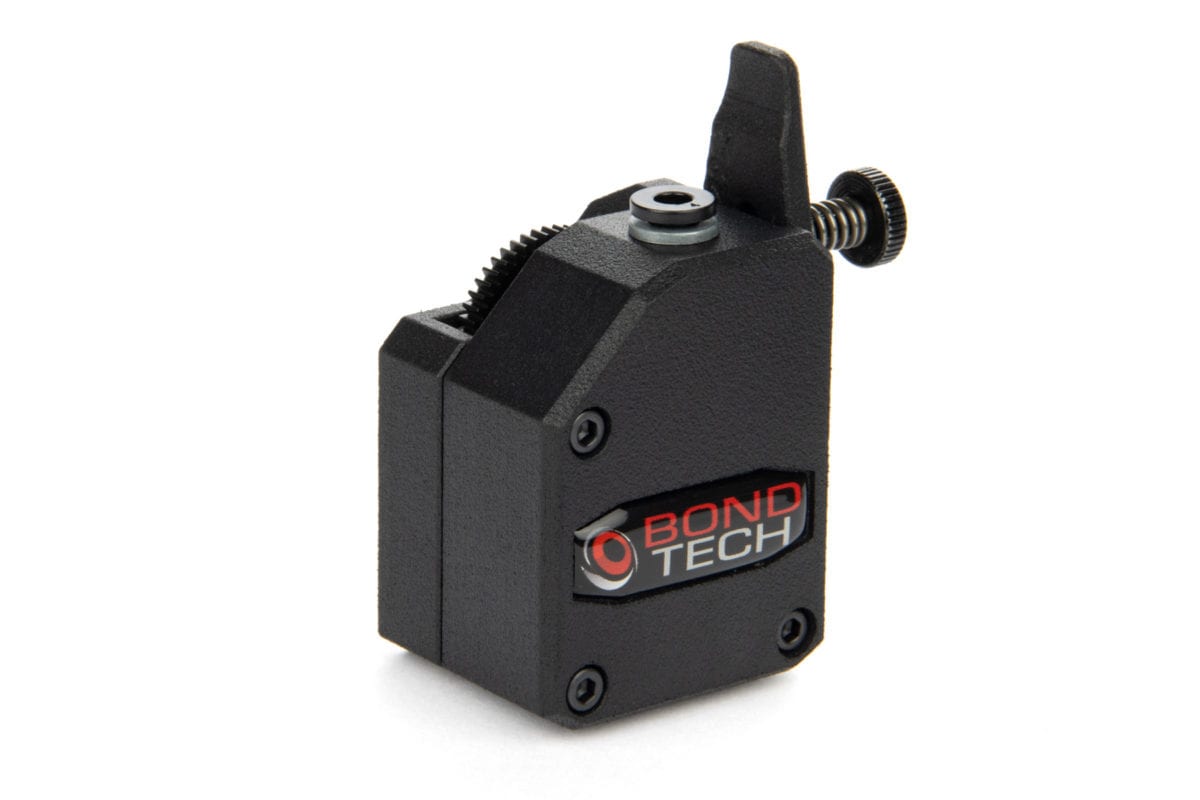
  • the mirrored version has the hinge on the left hand side
  • the mirrored version has a filament path that crosses the BMG™ on the left hand side of the primary drive gear.


  • The standard version has the hinge on the right hand side when facing the Bondtech logo.
  • The standard version has a filament path that crosses the BMG™ on the right hand side of the primary drive gear.


Why does it reverses the feeding direction?

Bondtech Mini Geared BMG™ Standard vs Mirrored

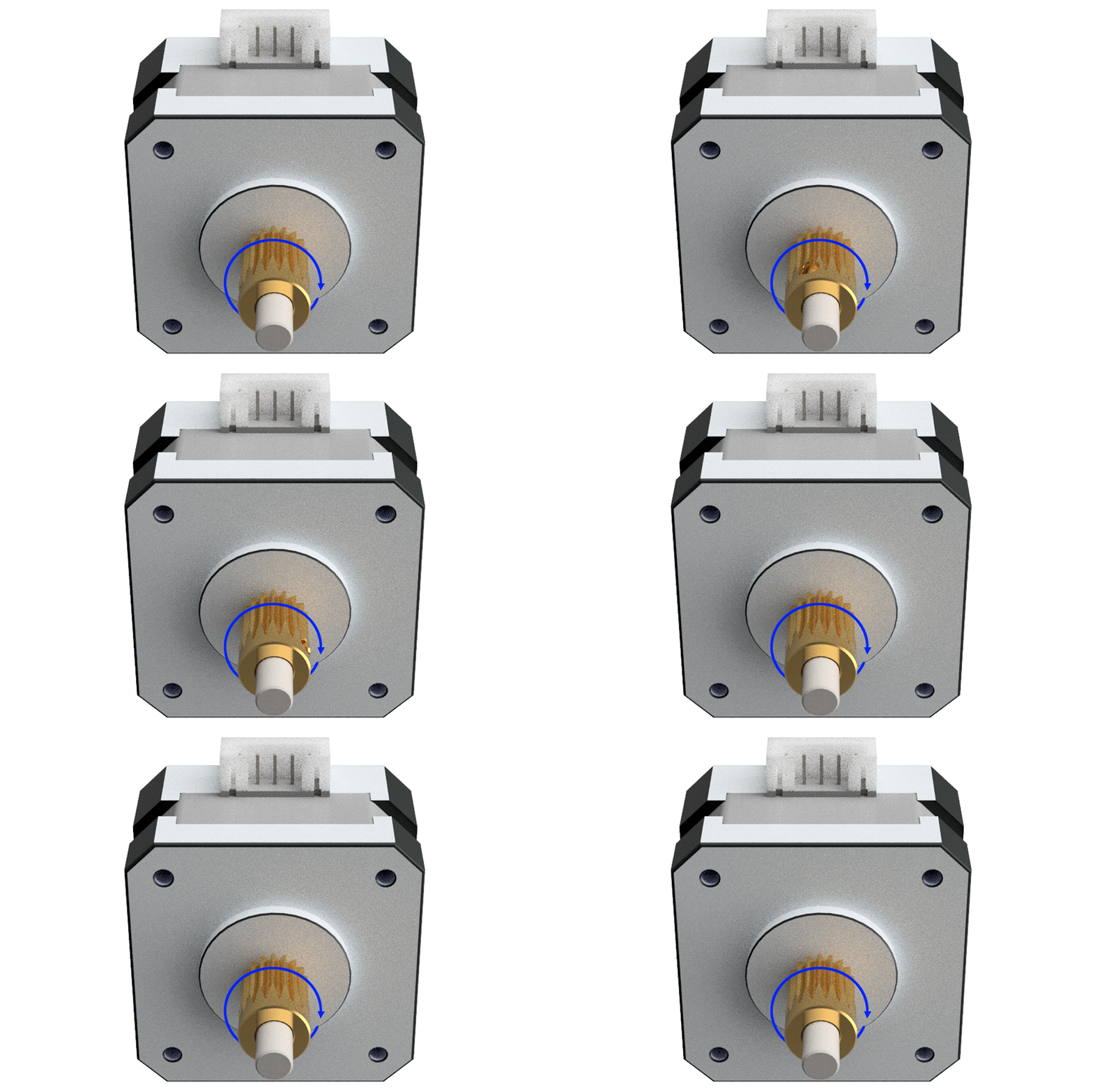
When facing a stepper motor shaft, we see it rotate clockwise, by default, when a load command is sent. It rotates clockwise when feeding, and counter-clockwise when retracting.

This can be changed either by swapping one pair of cables on the connector, or by changing the rotation direction in the firmware, although the latter is not available on all printer models.


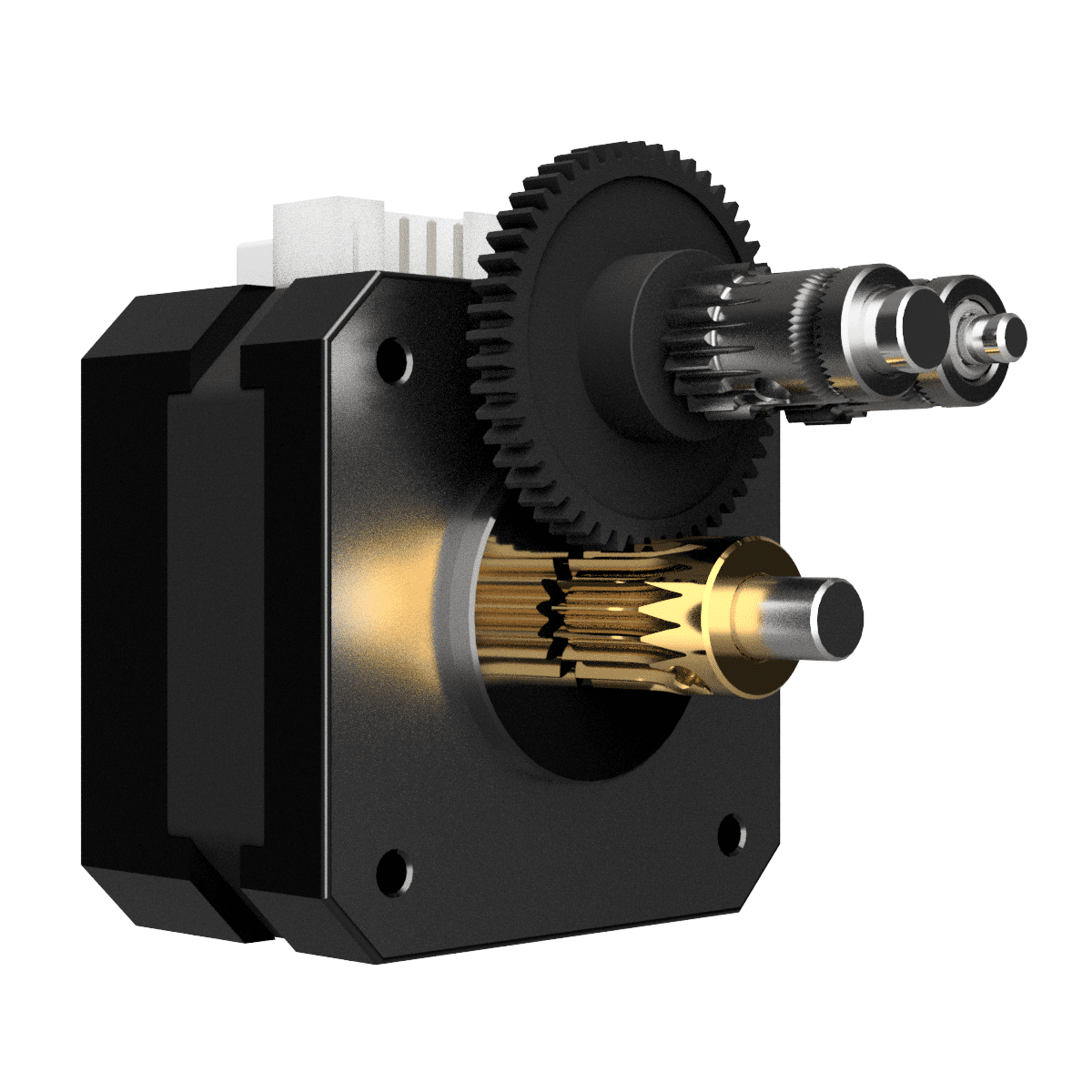
Inside the BMG™, the motor gear engages the main gear (black POM gear) and makes it rotate the opposite direction (counter-clockwise on load).

The primary drive gear is attached to the same main shaft as the main gear, and rotates in synchrony with it.

Depending on its relative position to the filament path, it creates opposite effects.

It is important to notice these effects change, if the filament flows from top to bottom or from bottom to top.


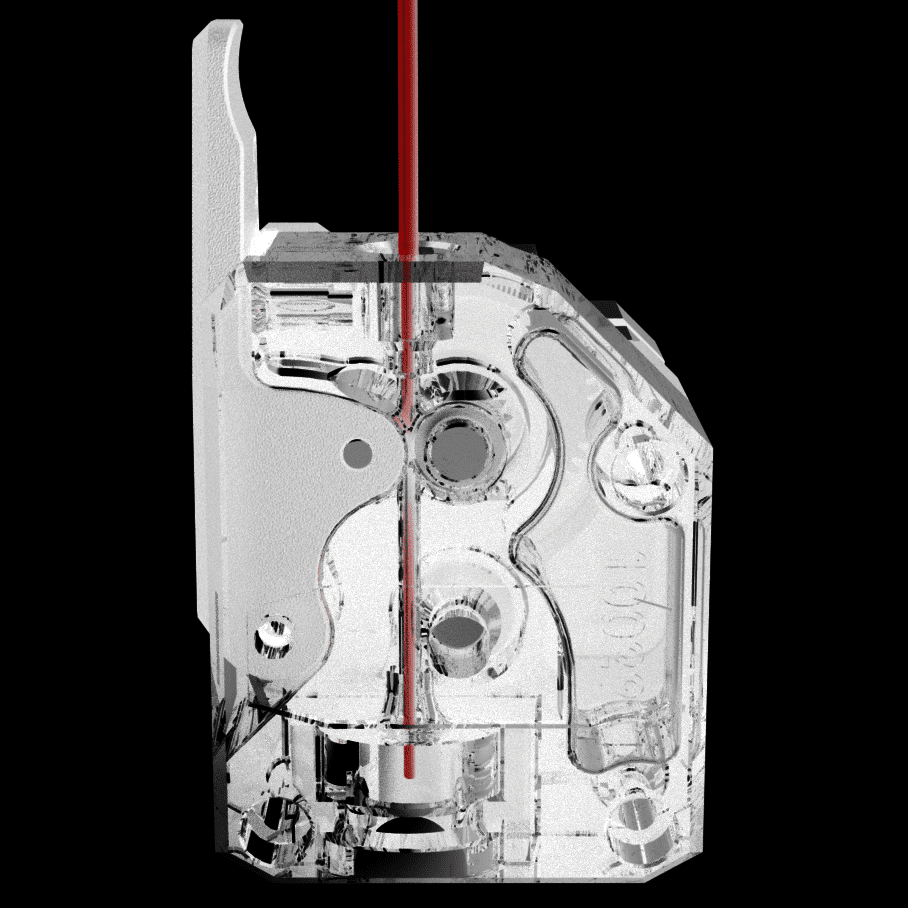
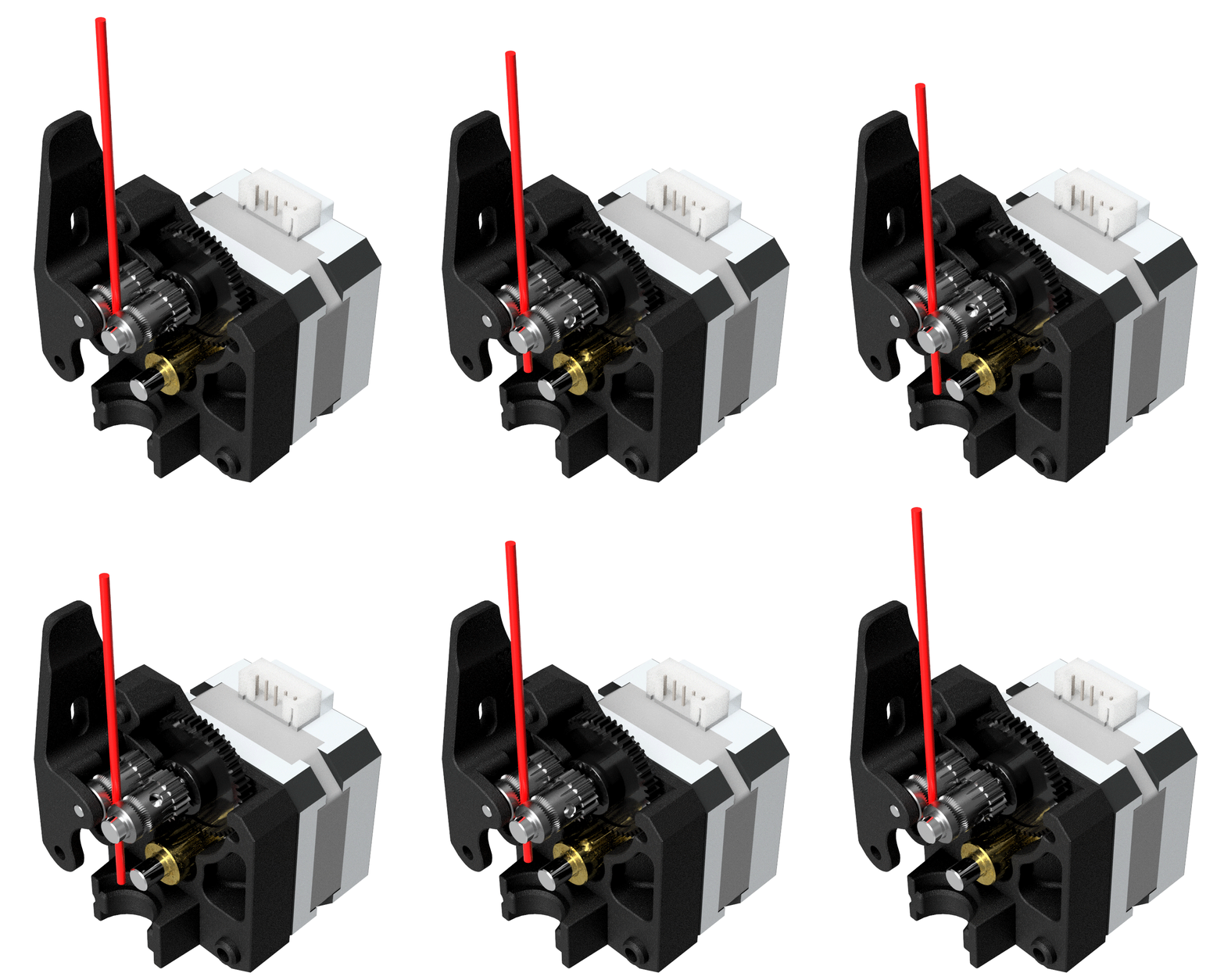
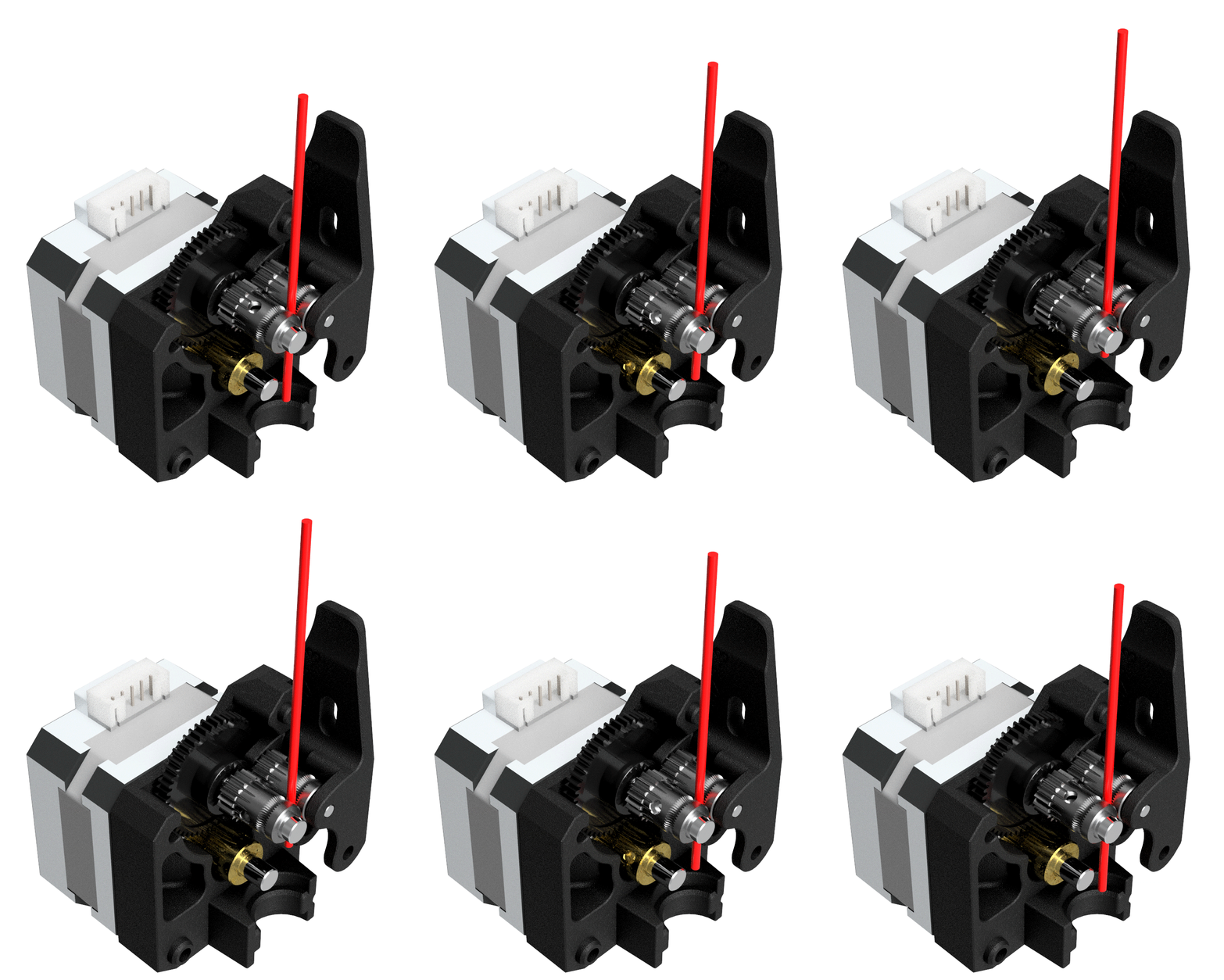
BMG™ Mirrored: when the filament enters through the top push-fit and exits through the bottom groove mount, it keeps the feed direction.

Watch the motor gear (brass). On the mirrored version, where the filament path, from entry to exit, flows on the left hand side of the primary drive gear, the default feeding direction is kept without change. This is because the drive gears push the filament down an up accordingly with the default load or retract movements.

BMG™ Mirrored: when the filament enters through the bottom groove mount and exits through the top push-fit, it reverses the feed direction.


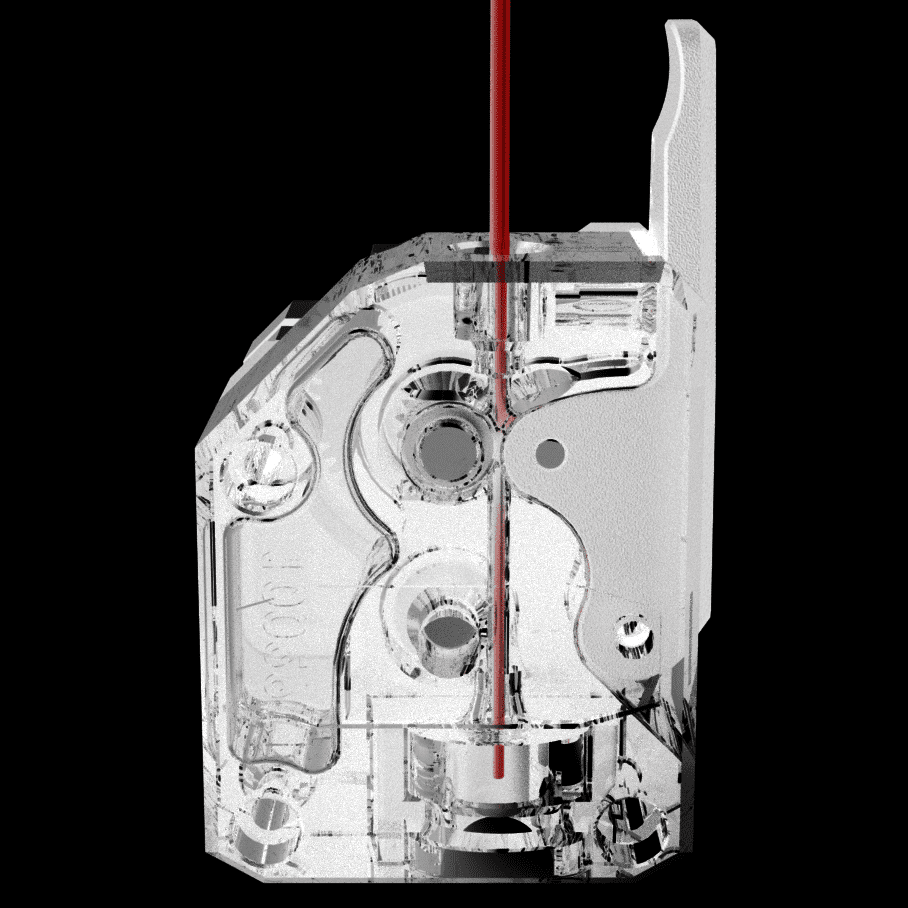
BMG™ Standard: when the filament enters through the top push-fit and exits through the bottom groove mount, it reverses the feed direction.

Watch the motor gear (brass). When the filament path, from entry to exit, flows on the right hand side of the primary drive gear, the default feeding direction is reversed. On load, when the motor gear rotates clockwise, the drive gears push the filament up. On retract, the drive gears push the filament down.

BMG™ Standard: when the filament enters through the bottom groove mount and exits through the top push-fit, it keeps the feed direction.


What BMG™ Best Fits A 3D Printer?


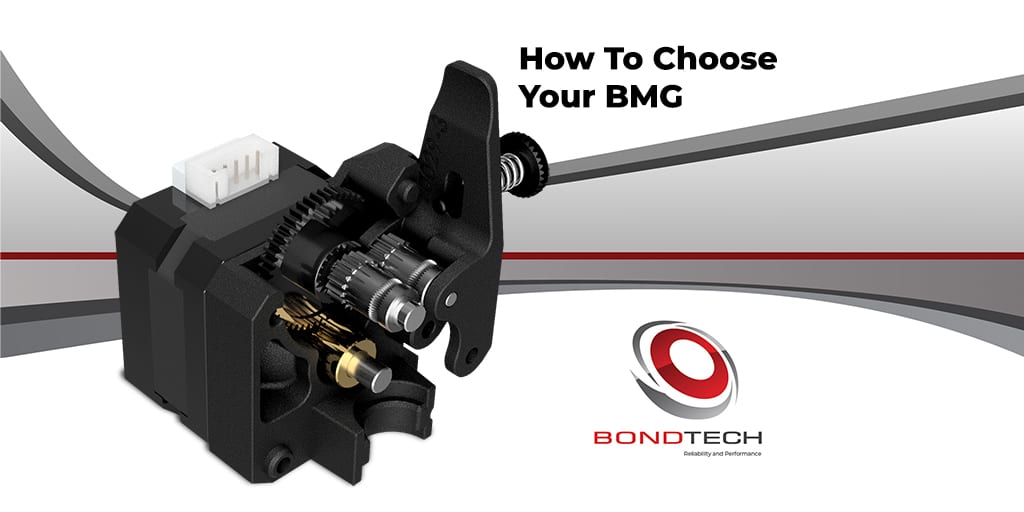
How to choose the right BMG™?

To properly select the right BMG™ for your application, users should ask themselves and decide about these 4 questions:

  • Bowden or Direct Drive?
  • Where and how will I mount it?
  • Which version gives me more clearance and the best access to the hinge and thumbscrew?
  • What best aligns with my current filament path?
  • To evaluate access users take into consideration being right or left-handed. Dexter people usually like to use the hinge on the right hand side, using the right hand to apply pressure on the hinge and thumbscrew and the left hand to insert or extract the filament.


What are hinge and thumbscrew for?

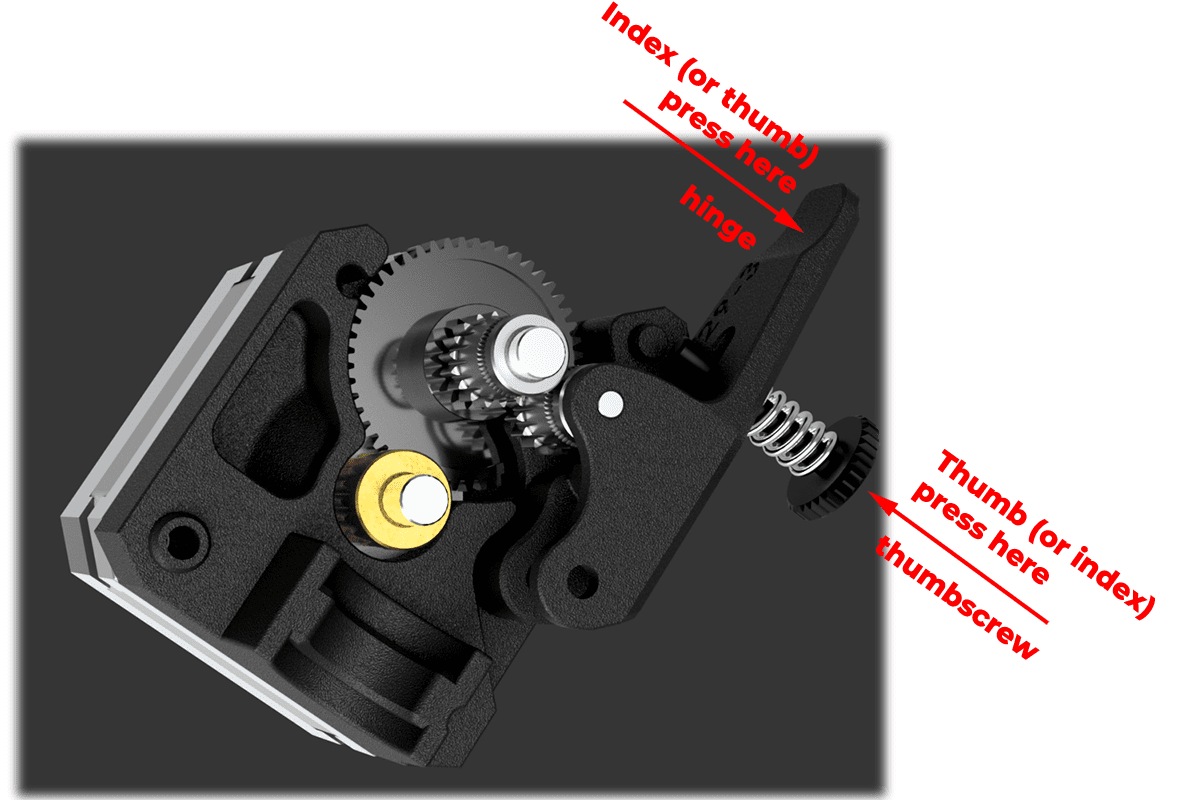
The secondary drive gear is attached to the hinge through a shaft and needle bearings. The thumbscrew crosses the hinge and screws in the BMG™ housing.

The hinge and thumbscrew assembly is a lever mechanism that allows to vary the pressure the drive gears put on the filament. A tighter thumbscrew is a better setting for harder filaments. A more relaxed thumbscrew is a better fit to softer materials,

During manual loads and unloads of filament, a user can press the hinge against the thumbscrew to disengage the drive gears and allow a faster insertion or removal of the filament.


Our Bondtech Mini Geared BMG™ is available for 1.75mm filament only
and with 2 versions for each of the 2 different mounting systems.
It always has a push-fit on the top.

The BMG™ is equipped with a groove mount:
BMG™ standard and BMG™ Mirrored


BMG™ Mirrored

BMG™ Standard


The BMG™ is one of our most versatile extruders. It is possible to use it on both direct drive and bowden setups.

  • on direct drive setups users can mount a V6 style hotend using the groove mount on the bottom.
  • For bowden setups the BMG™can be used in two ways:


With filament guide

  • Filament entering through the bottom, using a filament guide installed on the mount groove, and exiting through the top push-fit.


With bowden adapter

  • Filament entering through the top push-fit and exiting through a bowden adapter installed inside the mount groove (the most robust bowden solution).


The BMG-M is equipped with the Mosquito mount:
BMG-M Standard and BMG-M Mirrored.


BMG-M Mirrored

BMG-M Standard


The BMG-M is our Mosquito and Mosquito Magnum best partner. The BMG-M was designed to be used in direct drive setups only.

Filaments always enters through the top push-fit and exits through the bottom.

BMG-M Standard always reverts the feed direction.

BMG-M Mirrored always keeps the feed direction.


Mosquito

Can be used with both Standard or Mirrored BMG-M.


Mosquito Magnum

Can be used with both Standard or Mirrored BMG-M.


Want to know more?

Register yourself or login to leave a Question, Reply or Comment in the section below.

If you didn't already, you can also subscribe to our newsletter to receive the short updates about our new products, updates or technology on your mailbox.

Thank you : )

About Bondtech DDX Direct Drive eXtruder for Creality

DDX Direct Drive eXtruder Phases 1 to 4

We presented recently our new
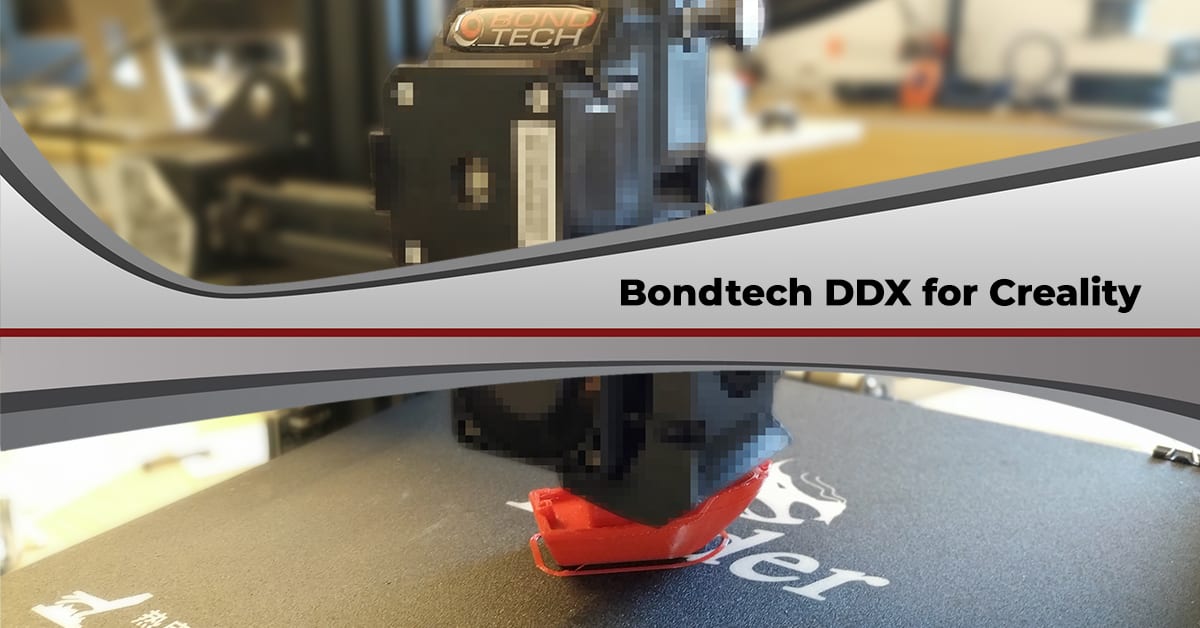
Bondtech DDX for Creality solution.

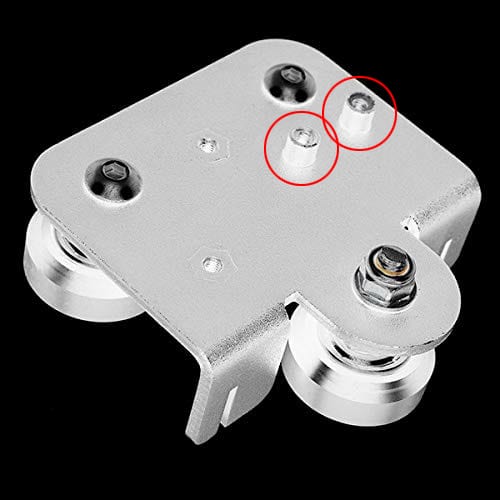
The DDX Direct Drive eXtruder is targeting all filament 3D printers from Creality, on the Ender and CR product families, that have these 2 mount points for the hotend on the X-carriage metal plate.

The DDX is a very versatile solution that brings improvements from the get-go, and was created especially for those looking to turn Creality units from Bowden into Direct Drive.


The DDX release on the 12th May, limited to 50 units, sold out in less than 24 hours. It was a very good sign the market is really looking for this solution, and especially one from Bondtech.

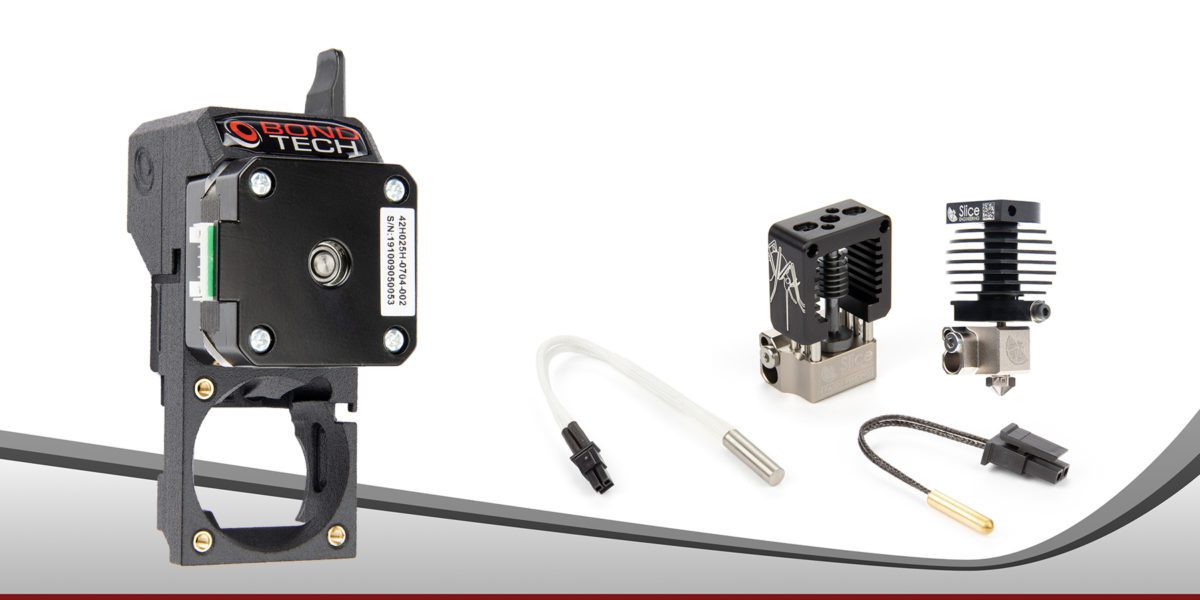
The DDX is a feeding and extrusion solution from Bondtech that allows upgrading the hotend as well, into 2 separate lines: Copperhead™ and Mosquito™. On each line, the user’s investment is protected from the start. A step by step upgrade is possible, and most of the elements bought before are re-usable.

The main philosophy behind DDX includes 3 principles: minimalism; versatility; ease of installation and service. We wanted to add as little as possible to the system and make it very light, while keeping user options open to Future updates, thus contributing also to make it easy to setup.

Due to the variety of hardware choices in the Ender and CR families, and the variety of requirements and investment possibilities of users, we are developing the DDX product family using 4 consecutive phases, allowing a step by step upgrade.

This article is to tell you more about it.


Phase One > Using the Original Hotend

Available again from beginning of June!


Phase 1 is characterized for having a central unit, the DDX itself, and an adapter set that targets a specific model, or group of models. The Ender-3 and CR-10S Pro were the first 2 adapter sets to be released. The Adapter Set for Ender-3 is also compatible with Ender-5, CR-10 and CR-10S. The Adapter to the CR-10S Pro is expected to be compatible with the CR-10S Pro V2 as well.


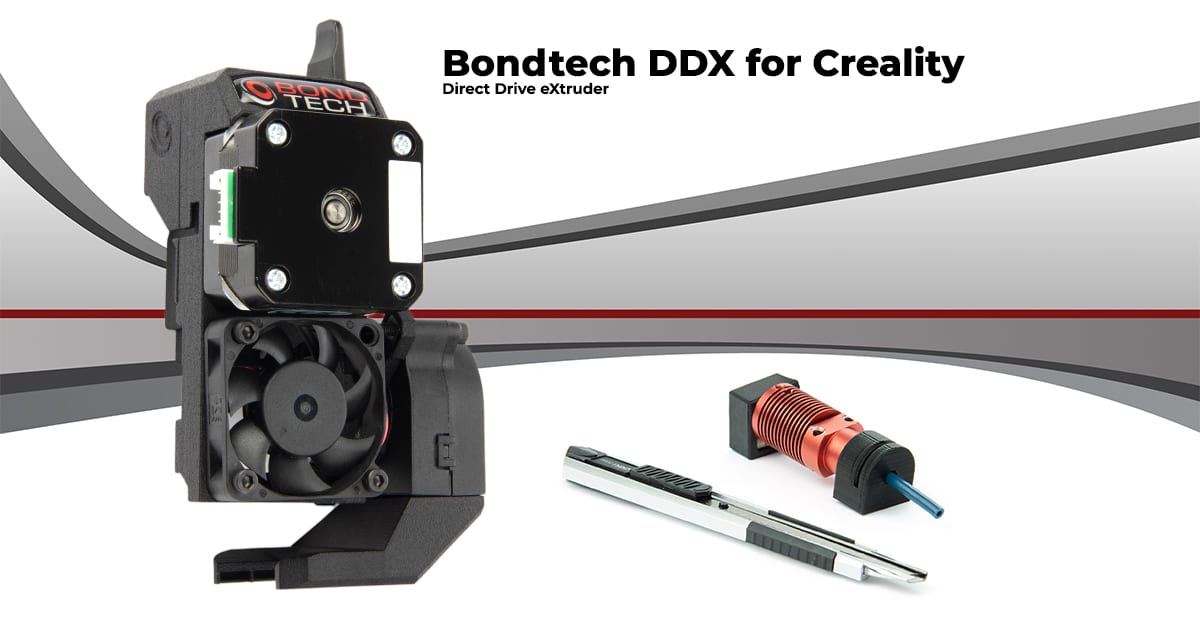
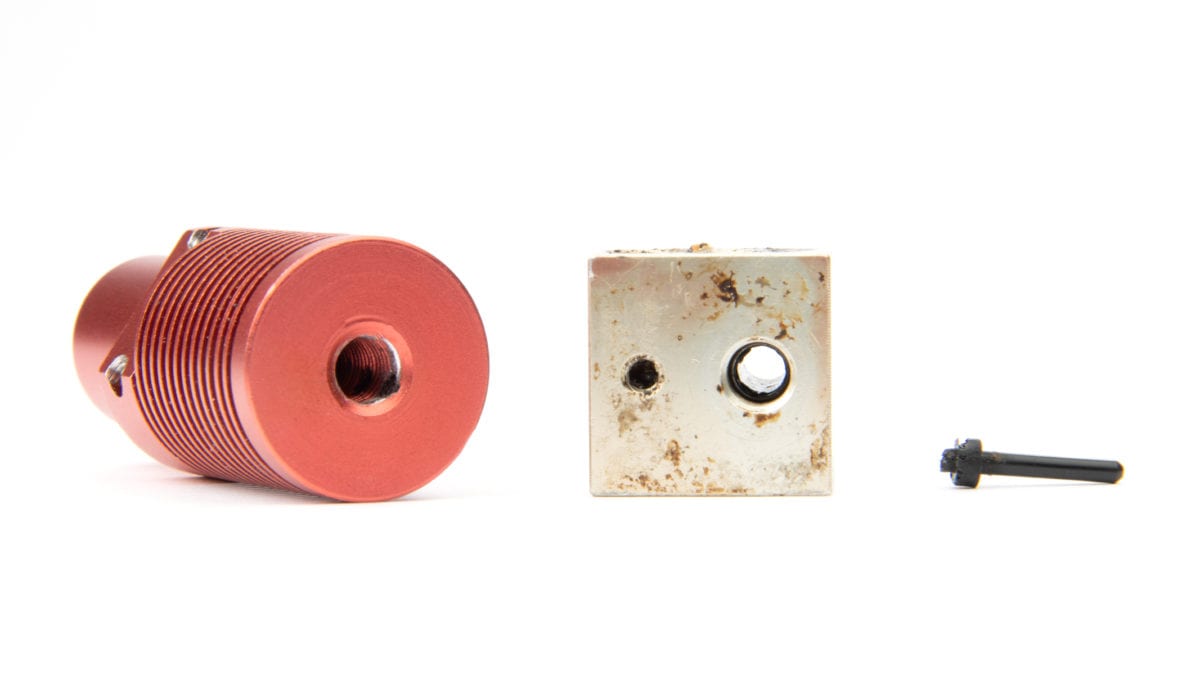
In the image above on the left we see a heat sink and a heat block from a CR-10S Pro, and a piece of filament from a cold pull.
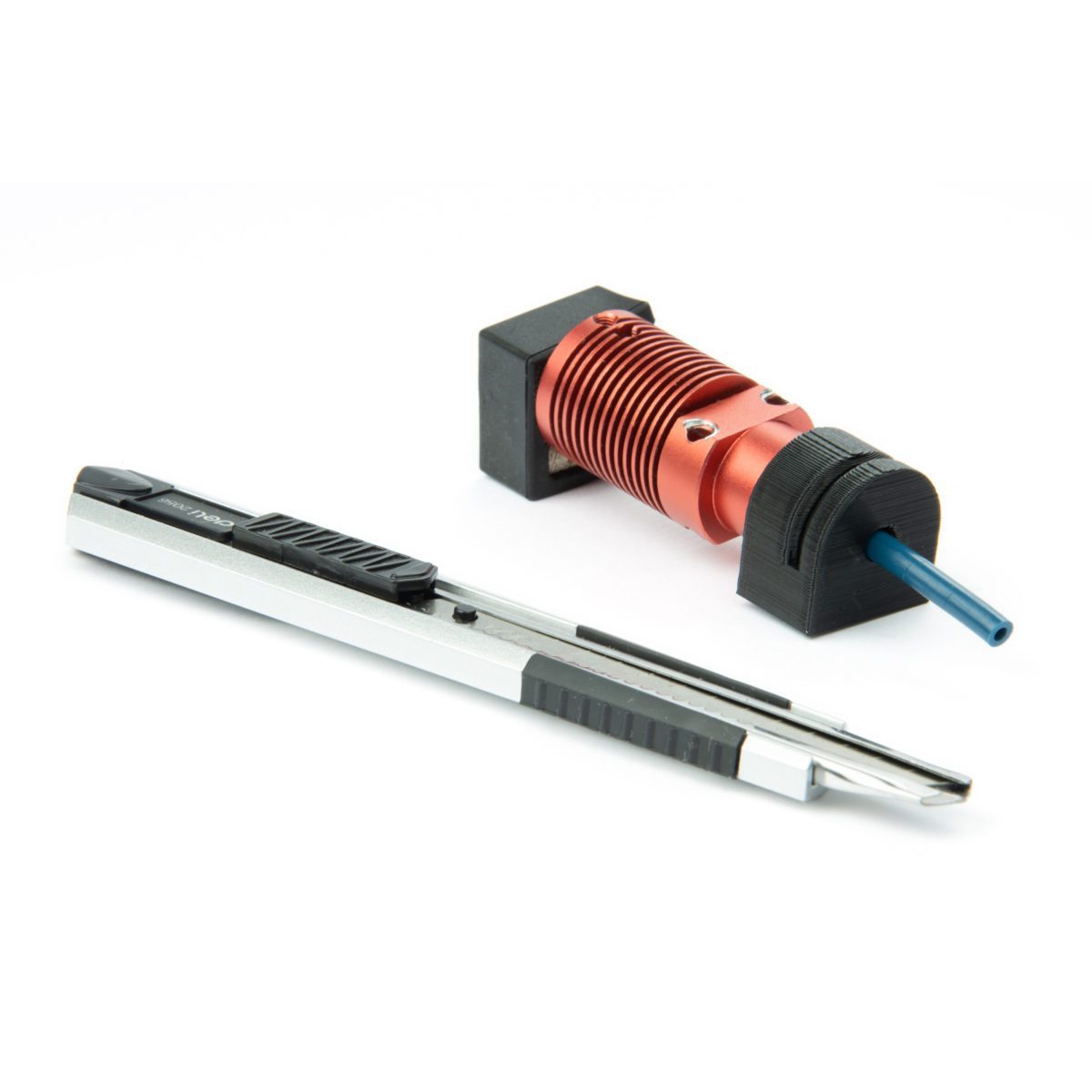
In the image above on the right we see a CR-10S Pro hotend with a Capricorn tube and the cutting tool in place.

The Creality units use all-through heat-breaks and PTFE tubes that go all the way the hotend down to the nozzle. With time, the heat of the heat block and nozzle leads the tubes to shrink. The shorter PTFE creates pockets of space for filament to build up jamms and clogs.


On Phase 1 the DDX uses the original hotend that comes with the printer, and improves upon it by replacing the PTFE tube inside with a Capricorn. We also supply a model of a tool to cut it to spec. The main advantage of the Capricorn tube in relationship to the regular PTFE is known. It is more heat tolerant and shows less shrinking along time, while exposed to the high temperatures of the heat block and nozzle.

No cables or firmware changes are required on Phase One.


Phase Two > Upgrading to Copperhead™ Hot Block and Heat Break

Available from mid October!


Although the performance of the “Capricorn improved” original hotend is not bad, it has some weak points some users may want to address.

Using a Capricorn inside the the original hotend improves its reliability but the risks remain. The Capricorn tube is inserted in the hotend all the way down to the nozzle. Not an optimal solution. Heat will eventually shrink the Capricorn as well.


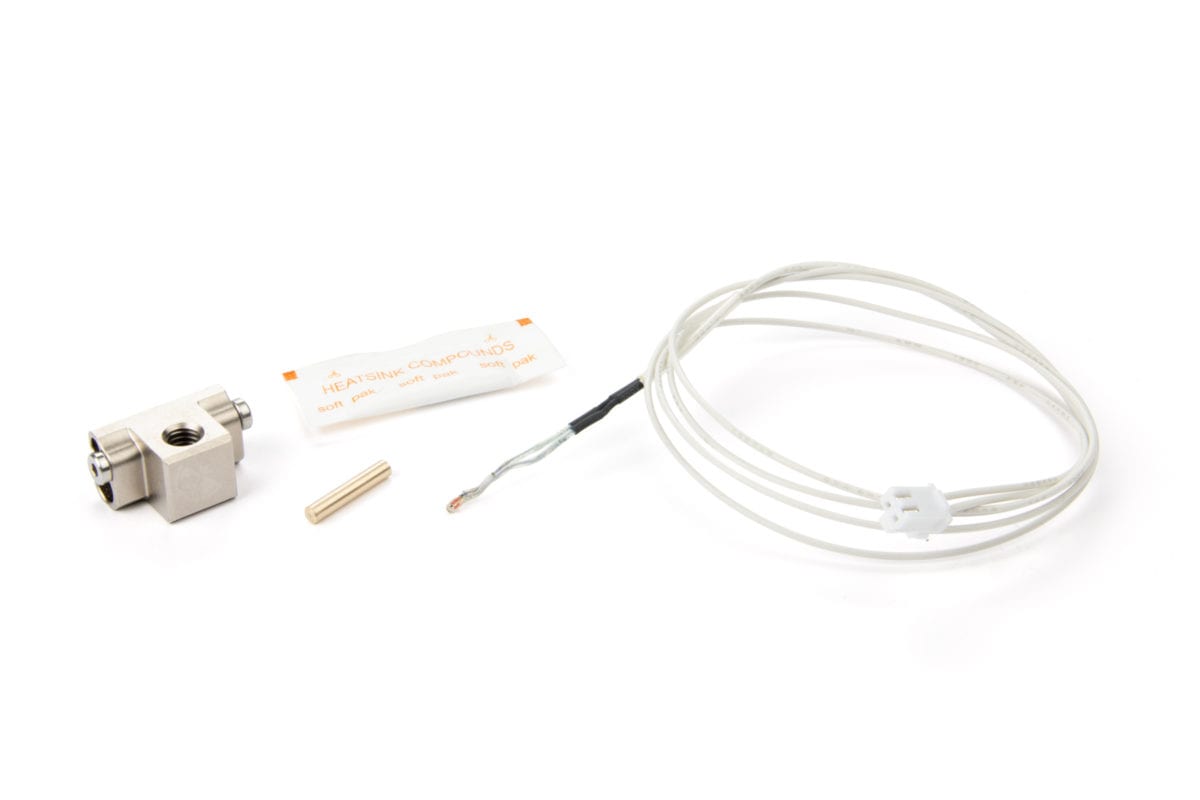
For that reason we created a very simple solution to adapt Creality Thermistors, so they can be used with Copperhead™ hotends.

On Phase 2, the components most responsible for Copperhead™ performance – the Nickel plated Copper Hot Block and Bimetall Heat Break – are used with the original hotend’s Heat Sink (that comes with the printer).

Phase 2 is not available yet. We will have available the Slice C-E Heat Break, a version for Ender-3; Ender-5; CR-10; CR-10S.

We are also working with Slice Engineering to extend Phase 2 to CR-10S Pro and CR-10 Max, with the creation of a new C-Pro Max Heat Break.

Both solutions will be available mid October


No cables or firmware changes are required on Phase 2.


Phase Three > Upgrading to Copperhead™ and Mosquito™ hotends

Available from mid June!


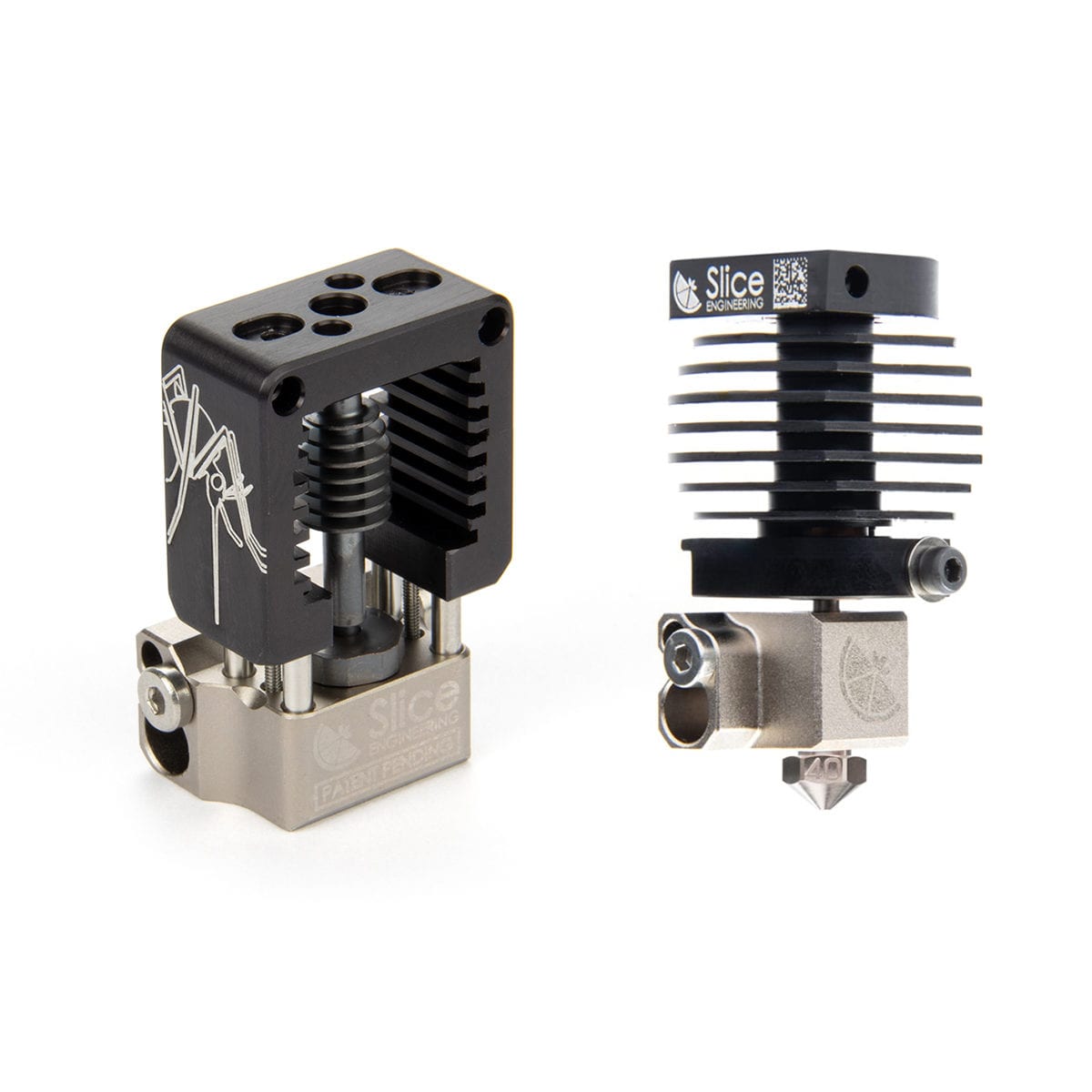
Phase 3 will allow users to upgrade the whole hotend to a full Copperhead™ (screw mount only) or to Mosquito™ (or Mosquito Magnum™).

An adapter is available to fit each Slice Engineering’s hotend model to the DDX. At this point, the same solution we created to adapt the Creality thermistor to a cartridge system, will allow for the original heater and thermistor cartridge to be used on these top of the class hotends.

This solution, although simple to implement and to use, limits the processing temperature of the hotend to 260° C.

If you are evolving from Phase 2 to Phase 3, you will need a Heat Break replacement, as the Copperhead Heat Sink only supports the Standard Heat Break.


No cables or firmware changes are required on Phase 3.


Phase 4 > Full Copperhead™ or Mosquito™ upgrade

Available from Mid October!


Phase 3 is good enough for users that want to achieve great performance while using regular and easy to print materials. Some technical material choices, users may want to use, fall beyond the Creality firmware and original hardware limitations. Creality units are set to work with materials which processing temperature is limited at 260 °C. It is known some Nylons and Polycarbonates require higher temperatures to be properly processed.

Phase 4 brings Slice Engineering hotends along with their 300 °C thermistor and 24v 50W heater cartridge, for users that want no such limitations. Work limits are raised up to 300 °C to allow all thermoplastic materials printable on an open chamber. Upgrading the thermistor requires to change the temperature tables on the firmware, and requires new cables sets we are preparing.

For Phase 4, two customized cabling solutions will be available for several models, more on the professional side, that may allow this upgrade. They will not be available soon but they will come in time, and no previous investment will be wasted.

Phase 4 will require cables and firmwares to be replaced.


We want to state the obvious. Bondtech is not Creality. This meaning, we have no participation neither responsibility over their product design and manufacturing. Due to observed small inconsistencies on Creality manufacturing, sometimes models may require different solutions than expected, or small adjustments. Please be aware and prepared.


Want to know more?

Register yourself or login to leave a Question, Reply or Comment in the section below.

If you didn't already, you can also subscribe to our newsletter to receive the short updates about our new products, updates or technology on your mailbox.

Thank you : )
New Prusa Firmware Update 3.9.0

Bondtech versions of Prusa 3.9.0 firmware are out now.

Prusa released past 18th of May their new firmware version 3.9.0

This is the final release of the firmware 3.9.0, a direct successor to the 3.8.1. Introducing new features, improved functionality, and bug fixes.


To simplify publishing the new Bondtech versions of the Prusa firmware, we created a fork on Github. This fork will also enable quicker Future updates when ever a new version comes out.

To quick access you can access now our firmware archives and the source code by visiting our GitHub folder:
Bondtech_Prusa_i3/Firmware/3.9.0/

Next Friday, 22nd of May the same files will be available to download from our website Prusa firmware page here:

Bondtech Firmware Variation Updates For Prusa 3D Printers


Bondtech DDX for Creality

A Direct Drive eXtruder for Creality

Bondtech is about to release a new family of Upgrade Kits. The DDX for Creality will target most of the Creality 3D printers and enable them with a Direct Drive setup.

The DDX is based on our popular and well tested Bondtech Mini Geared (BMG) extruder and will provide the upstanding resolution and push-force it is known for.


The DDX for Creality will target the following models of the Ender product line:

  • Ender-3
  • Ender-3 Pro
  • Ender-5
  • Ender-5 Pro
  • Ender-5 Plus
  • Ender-6


The DDX for Creality will also target the following models of the CR product line:

  • CR-6
  • CR-10
  • CR-10S
  • CR-10 S4
  • CR-10 S5
  • CR-10 Max
  • CR-10 Mini
  • CR-10S Pro
  • CR-10S Pro V2
  • CR-X


The DDX product line has a common eXtruder, and a limited number of variations implemented at the level of hotend and fan mounts and adapters. The compatibility will depend on the hotend and X-Carriage plate the models use. A list will be supplied, in the respective product pages, and expanded as soon as we have verified compatibility.

These mounts and adapters will be sold as standalone parts, for a particular set of models.
Two main variations will be released first.
One that fits models like the Ender-3, and another that fits models like the CR-10S Pro.

The DDX is supplied with a 25mm pancake Nema17 stepper motor, but without hotend.
Customers will have 3 choices:

  • to use the original hotend;
  • to use Mosquito and Mosquito Magnum;
  • to use the upcoming Copperhead;

This product line is expected to be pre-launched during the 1st week of May.

Correction
Pre-launch of 50 units only, will start next Tuesday, 12th May

Bondtech and Slice Engineering strategic cooperation agreement

Another historical agreement is signed

Bondtech (Sweden) and Slice Engineering (USA) have signed an agreement for strategic co-operation on product development.

The agreement was signed into effect by Martin Bondéus and Daniel Barousse, the owner of Bondtech AB, and CEO & co-founder of Slice Engineering (Slice), respectively.


This agreement will translate into:

  1. Closer integration of technologies with cost and performance benefits;
  2. Sharing of R&D resources – legacy, present and future – to enjoy a shorter time to market for new products and systems;
  3. Creation of a broader range of solutions and alternative versions to adapt to each other’s products;
  4. Long term investment in building comprehensive, consistent, high performance whole print-head solutions that can cater to the full breadth of market segments, including consumer, professional and industrial spaces.


The aim of the agreement is sharing the pool of knowledge – in materials technology, filament extrusion and 3D printing – to develop complementary, customized and coordinated offers between Bondtech’s feeders and Slice’s hotends, that both companies can use to go-to-market with full print-head solutions.


Daniel Barousse
Co-founder & CEO

Slice Engineering LLC


“We have long admired the Bondtech team. This new alliance allows Slice to focus on our strengths in thermodynamics, and leverage Bondtech’s expertise in extrusion technologies, to provide integrated 3D printing solutions that compete on a global scale.” Daniel Barousse, Feb 2020


Under this agreement, Slice expands its product portfolio and creates custom hotends to couple with Bondtech’s previous and new Dual Drive extruders. Bondtech simultaneously expands its portfolio and creates a new generation of Dual Drive extruders to couple with Slice Engineering’s current and future hotends.

The first tangible results of this product integration will be on display at MRRF2020 (April 3-5th, Goshen, Indiana), where both companies will exhibit examples of solutions that represent the Future of their common offer.

Together we’ll unveil the most flexible and high-performance array of compact and light print-head solutions ever seen in the desktop and industrial 3d printing space.


Martin Bondéus
Founder & CEO

Bondtech AB


“From the start of our relationship Slice has been an invaluable partner. Their knowledge and complementary product range was always aligned with our goals of delivering reliability and performance. This agreement takes us further to pursue global solutions with very unique selling propositions.” Martin Bondéus, Feb 2020


As you may know, Slice is a hotends and nozzles manufacturer from Florida, USA, with a brilliant spread of products and a high quality track record. Besides being the creators of the awesome Mosquito hotends, Slice also brings to market a range of high performance Vanadium nozzles. For Slice, the main focus is enabling to print faster, with higher resolution, using engineering-grade plastics.


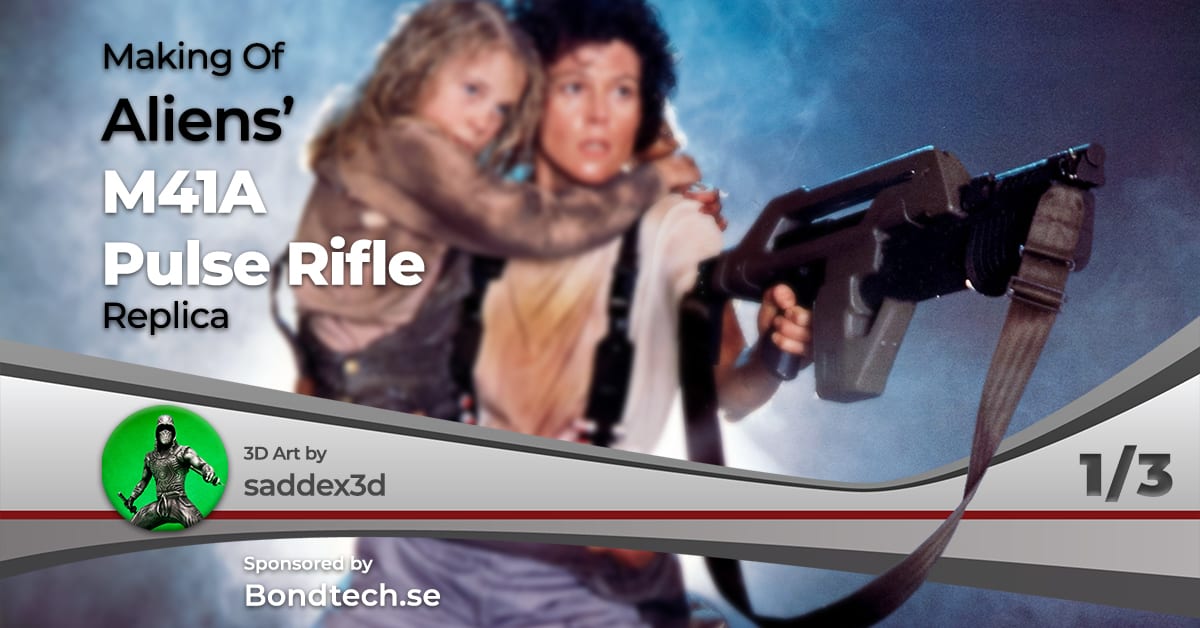
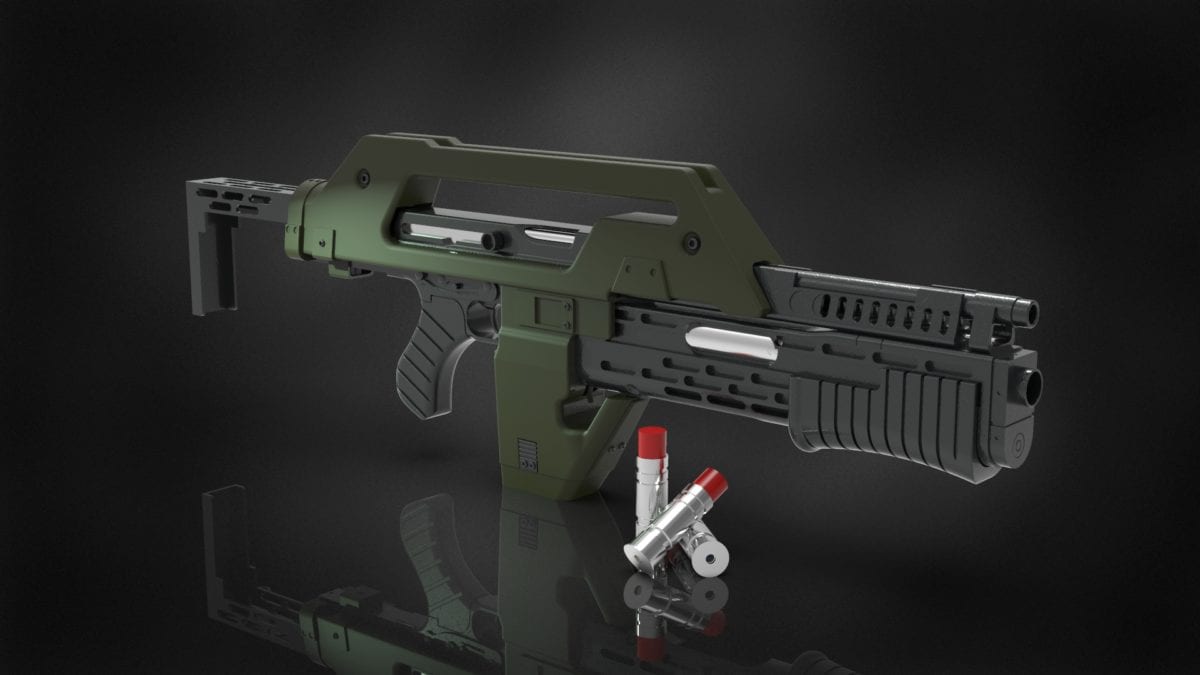
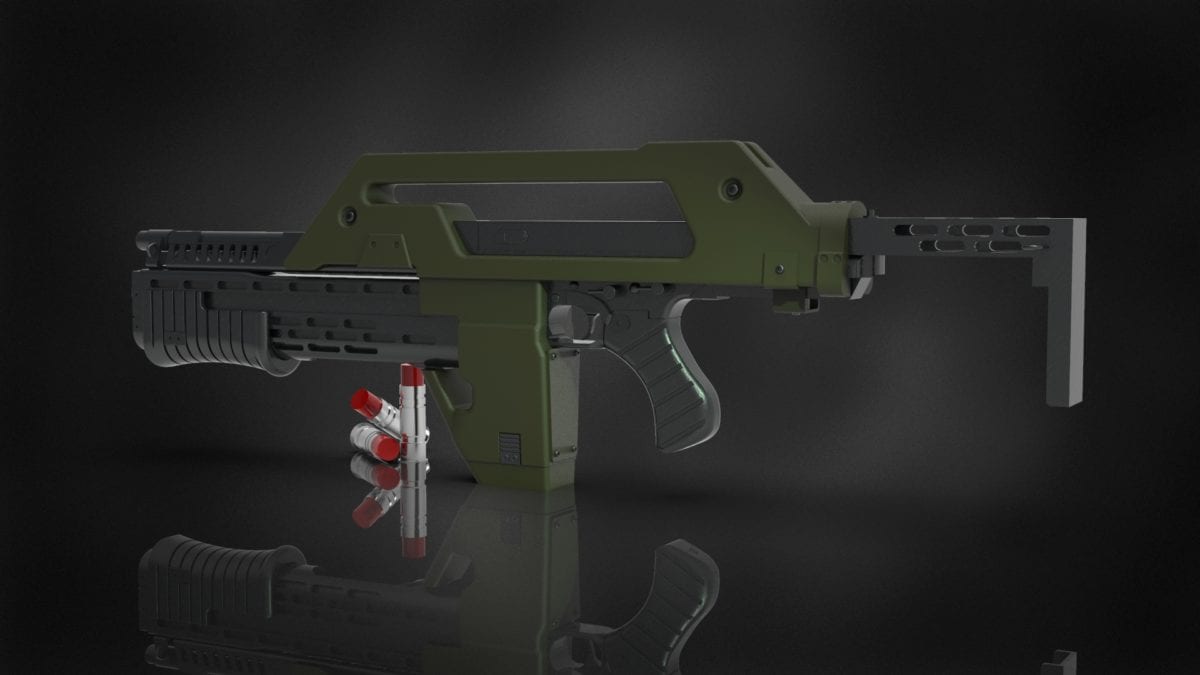
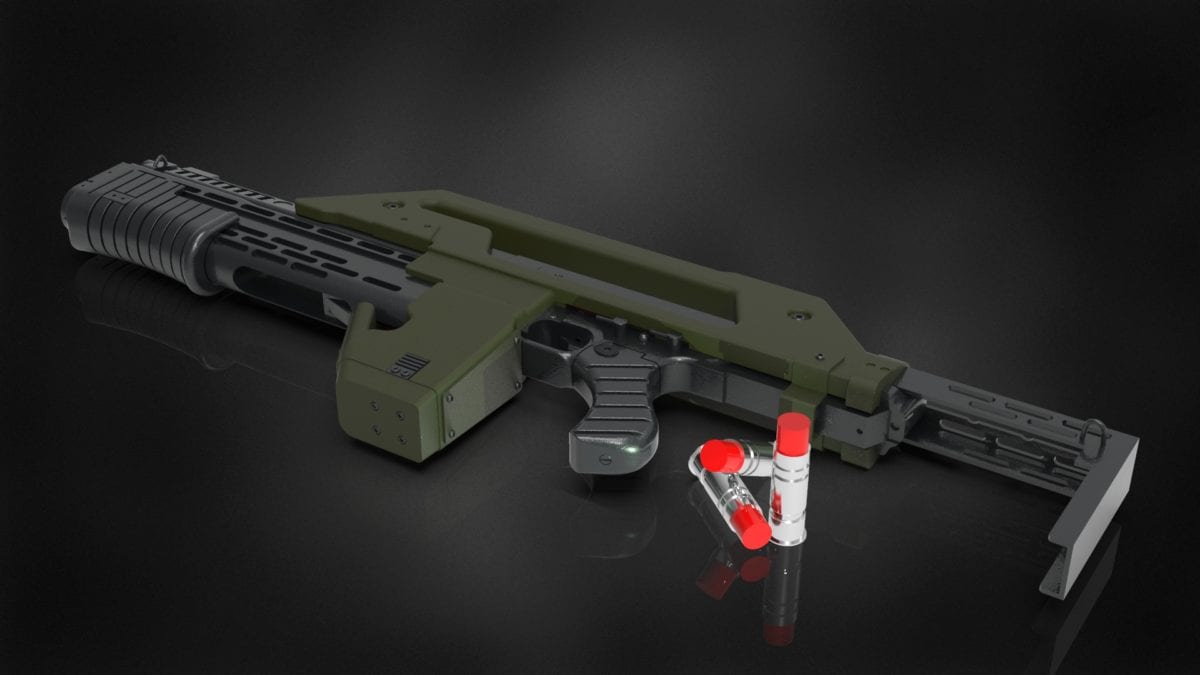
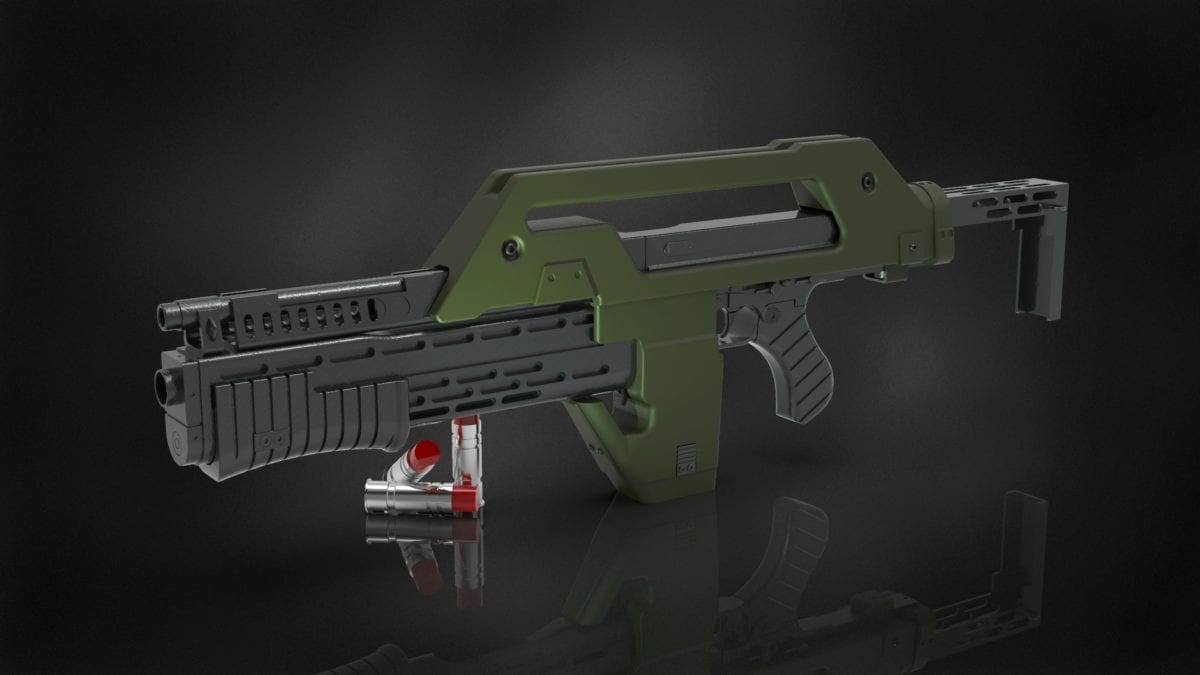
Making of Aliens’ M41A Pulse Rifle Replica, by saddex3d


Aliens (1986)

This is a Twentieth Century Fox movie directed by James Cameron, sequel to Ridley Scott’s Alien (1979), where Ellen Ripley fights and survives a group of nasty and aggressive reptilian-like alien killer creatures with acid blood, during a rescue mission on a deserted space colony where a young girl is the sole survivor. One of the 100 best movies ever!!! (according to IMDB)

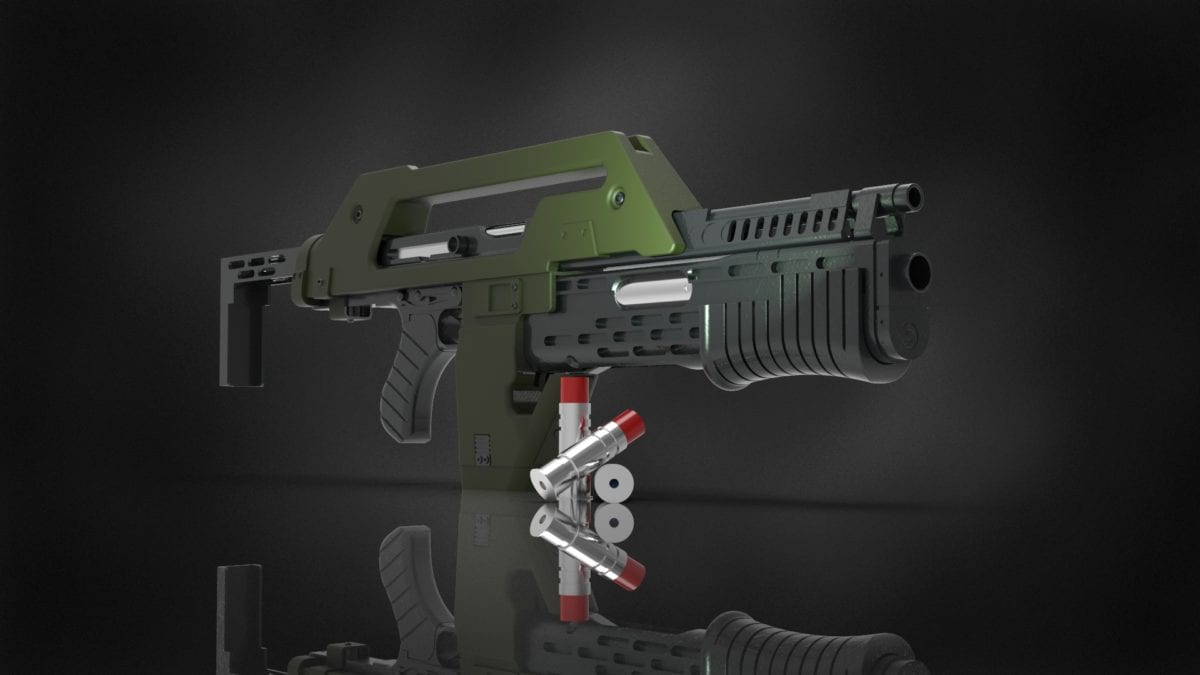
The M41A Pulse Rifle is the iconic weapon held by Ripley in the poster and also in many combat scenes throughout the movie.


saddex3d, what can you tell us about this project?

“I made many different props/replicas from movies and games, so this one was a new idea that came from my Canadian friend Tarry (tmaxprops). Together we made many 99% accurate replicas with 100% customer satisfaction and this one won’t be an exception.” Dario Klepic, Feb 2020


During this project, saddex3d goes through 3 different steps:

  1. 3D design a replica of the iconic weapon. The project includes 25 parts, designed to be 3D printed; (current step)
  2. 3D print all the parts using a Prusa i3 MK3, upgraded with a Bondtech Upgrade Kit for Prusa.
  3. Send the parts to his partner, @tmax_props from Canada, for finishing and paint job.

This model will at the end be sold through Tmax Props Etsy shop.


Currently at Step 1 – 3D modelling – Here is how to do it:


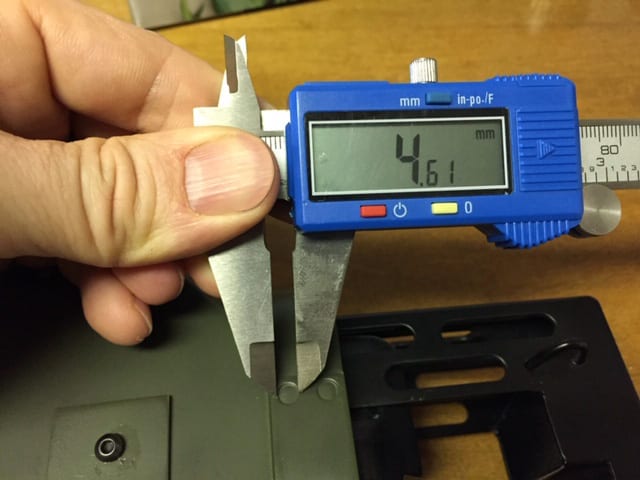
Taking measurements

First step to accurately create a replica is to take measurements of an original piece or of a good look-alike prop. In the case of the M41A, saddex3d went above and beyond to take note of all dimensions in every nook and cranny, from bulk elements to the very tiny details.


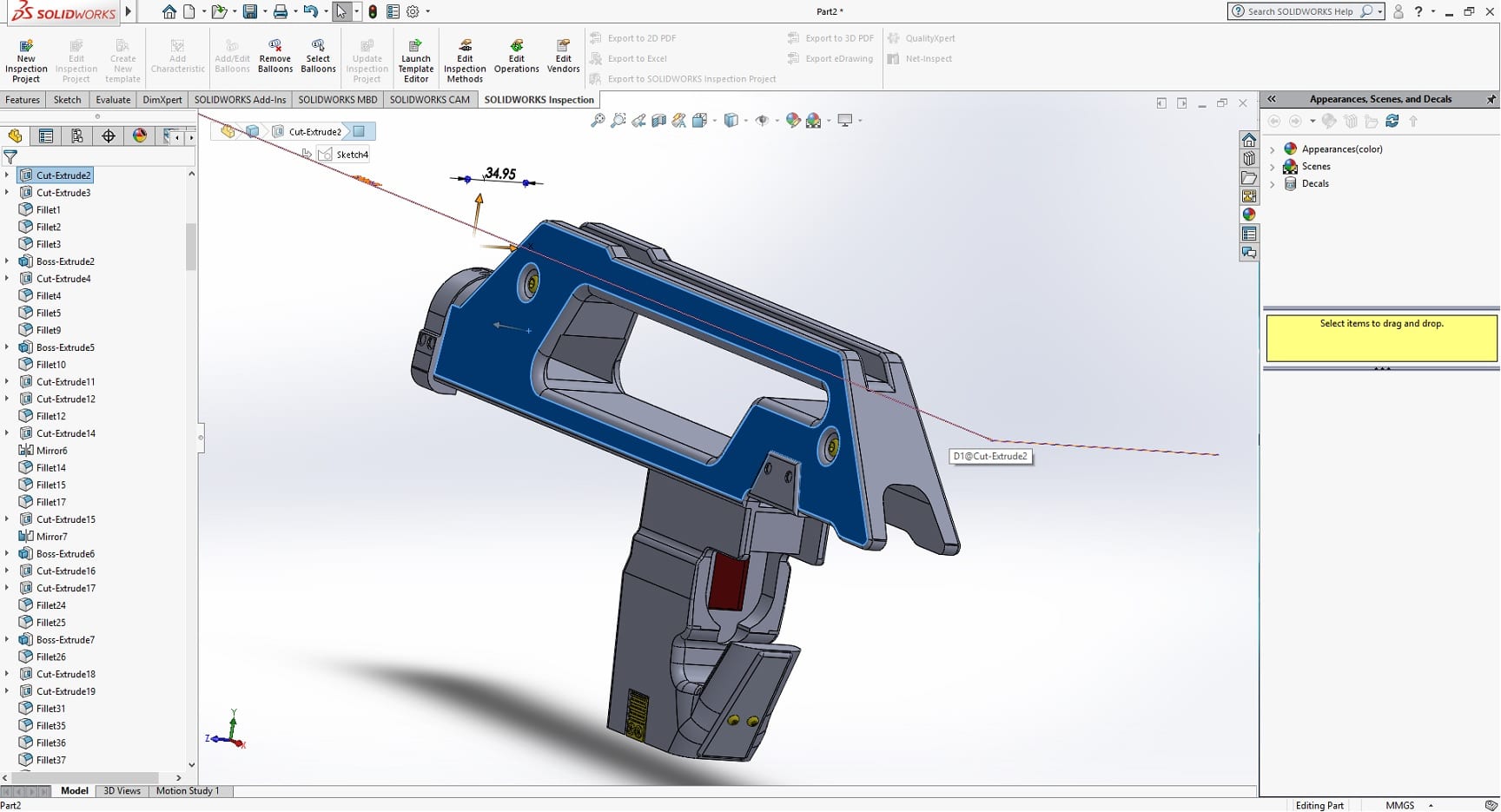
3D Modelling in Solidworks

Being this project a replica of an object, with mechanical properties, shapes, and snap-fits, saddex3d chosen to use Solidworks. Every single part was designed with engineering precision and tight tolerances without forgetting the tweaks to enable parts to be 3D printed.


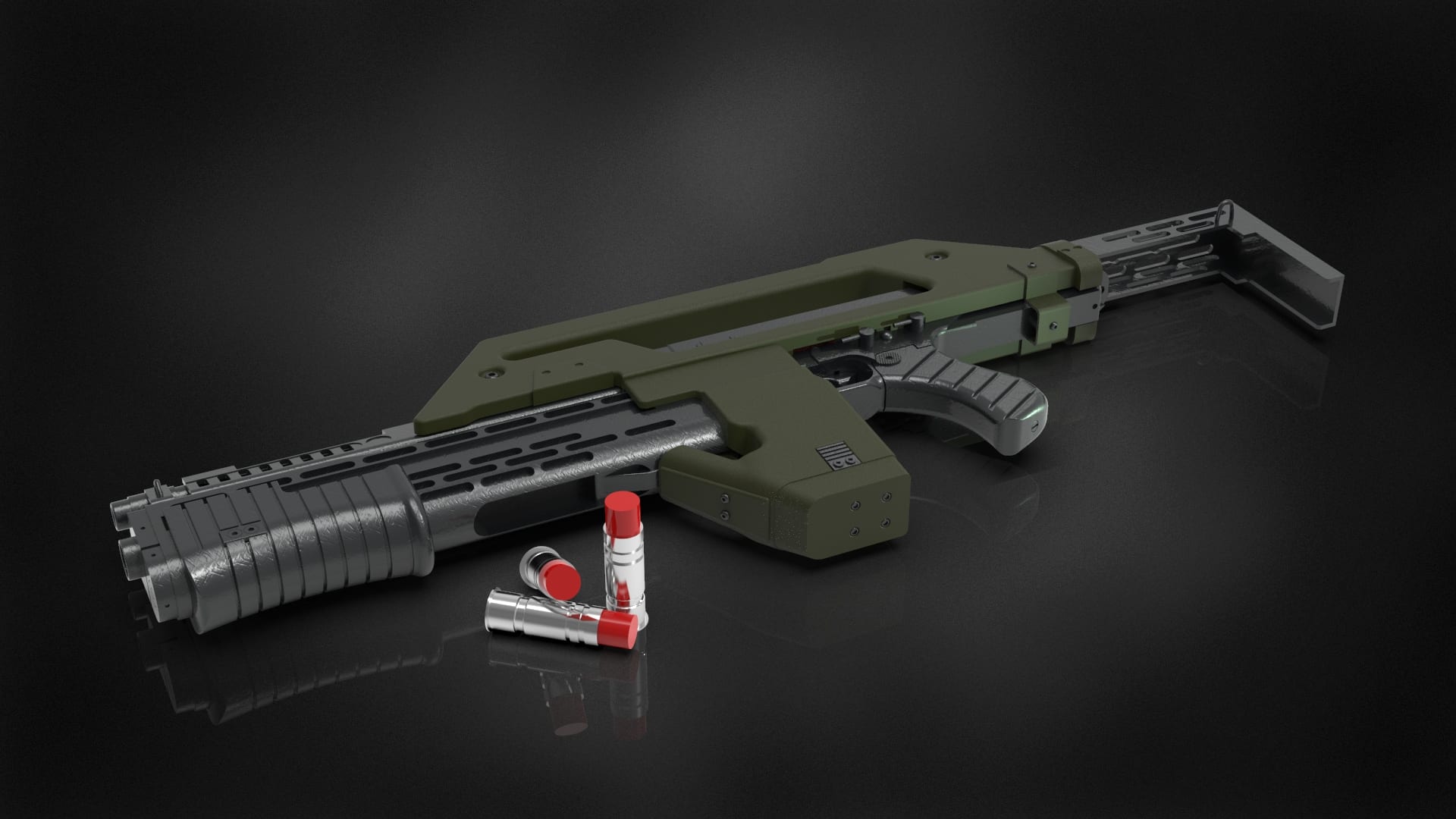
Making (BPR) renders

Render is a crucial part of the project. It gives the designer a way to detect what’s missing or a sense of completion. In projects developed in Solidworks, Renders are easily made with PhotoView 360 and will provide a guide to the finishing process during post-production.


Renders gallery


Who is saddex3d?

saddex3d is a 3D Artist from Osijek, Croatia
named Dario Klepic. In his own words:

“I am a self taught 3D modeler. I started using Solidworks with Star Wars diorama. After that I started to make weapon replicas and past year have been learning Zbrush and organic modeling. 3d printing is my passion. I am still amazed that something I create in a program, can be in my hands in a couple of hours.” Dario Klepic, Feb 2020


saddex3d uses
Bondtech to 3D print.


Want to know more?

Register yourself or login to leave a Question, Reply or Comment in the section below.

If you didn't already, you can also subscribe to our newsletter to receive the short updates about our new products, updates or technology on your mailbox.

Thank you : )

Original BMG vs clone

An opportunity we could not miss

A friend of ours sent us yesterday a cloned BMG for us to inspect and evaluate.


We previously based our report on good feedback we received from people we respect in the 3D printing world. Although we trusted, and still trust, their feedback, to have an actual unit here with us, allow us to explore two opportunities.


On one hand we can examine a cloned BMG and see for ourselves what the differences are.
To do a comparison.

On the other, maybe there is someone out there thinking it’s all the same or can’t tell the difference.
To broadcast an alert.


The Broadcast Alert First

As we mentioned in the earlier post The knockoffs, the clones and the copycats, when referring to the clones,

“Although they are called clones, in fact those are not exact replicas of our extruders. There are some small differences, big enough to result in lower reliability and performance.”

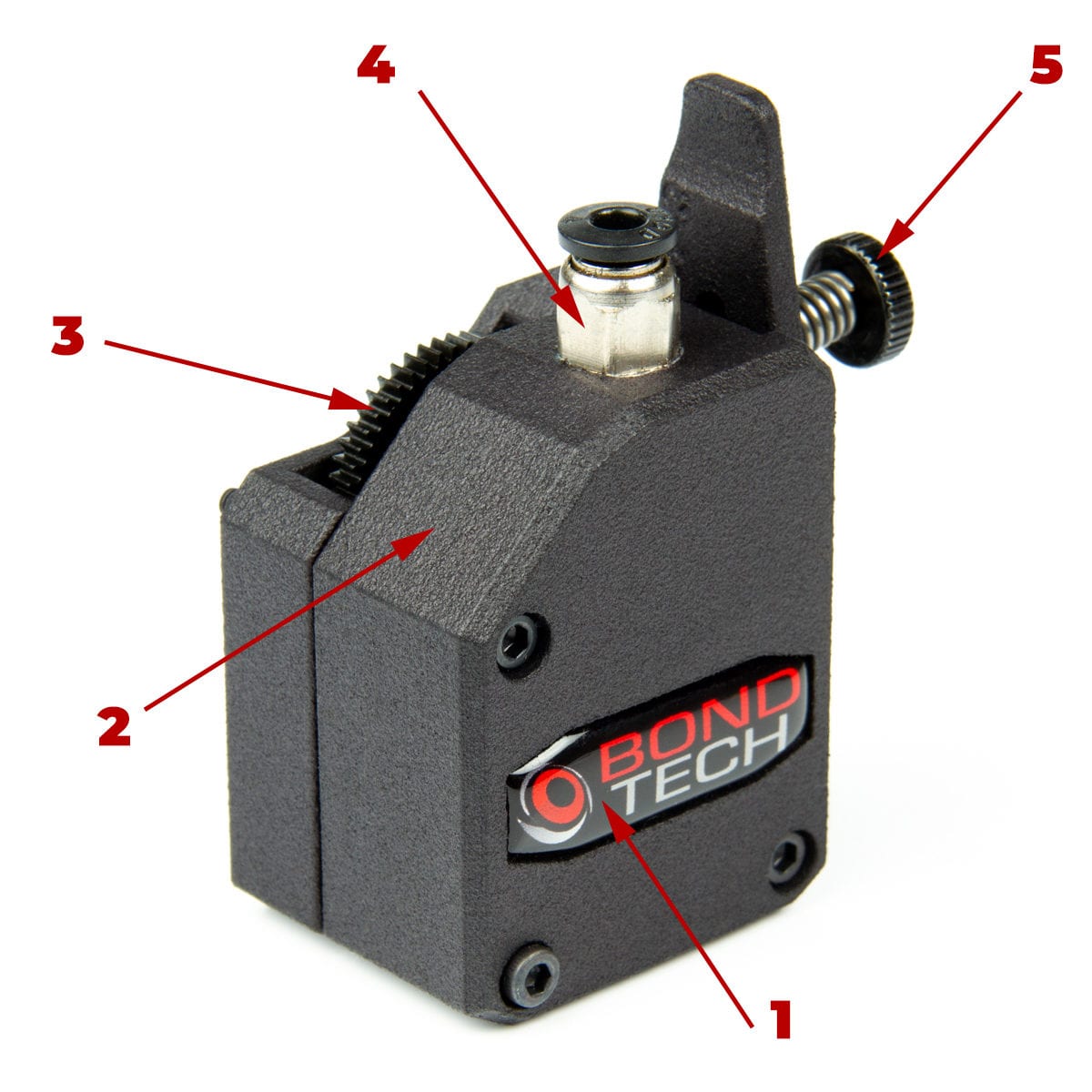
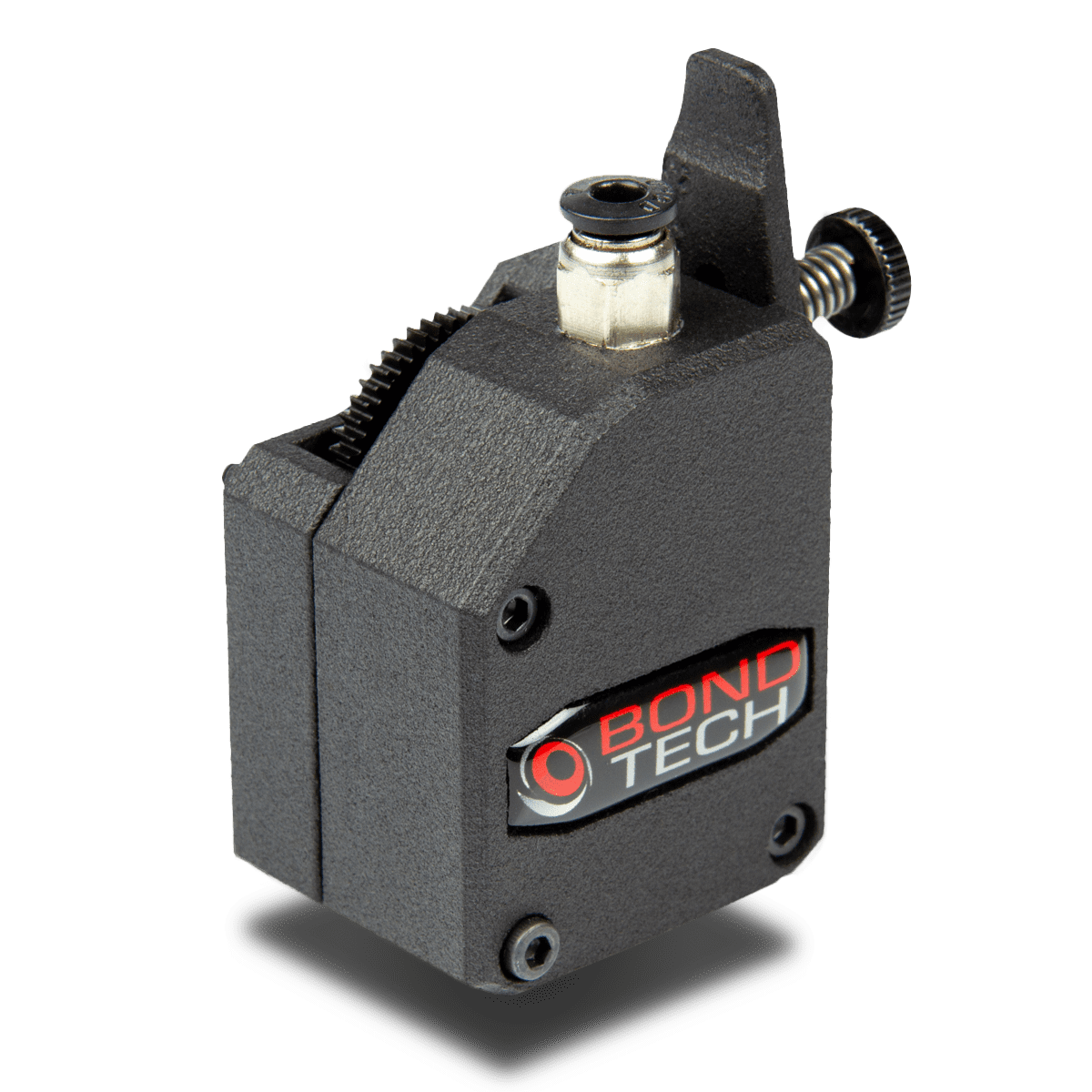
On the interior we will reveal some findings on the comparison done below. On the exterior we can pinpoint right now these 5 features of our extruder:

  1. the resin badge with Bondtech logo;
  2. the external surface’s SLS texture;
  3. the black POM main gear;
  4. the threaded metal push-fit
    (the BMG-M uses the former kind );
  5. the black thumbscrew


If the highlighted features cannot be found in the BMG™ you are buying or using, you are not in the presence of a real, original Bondtech BMG™.

The Comparison Second

This comparison uses the clone we got (in all the pictures to the left hand side) and an old BMG™ (to the right hand side) that we use in our showroom. Our BMG™ was upgraded last September with the new black POM main gear.

All the gears featuring in the pictures were cleaned with a brush.

The images are unedited and can be clicked to blow up the details.

We are not going to dive-in deep here. This has been a very didactic journey for us but, there are many other details that we rather not speak about, so we don’t teach other manufacturers.


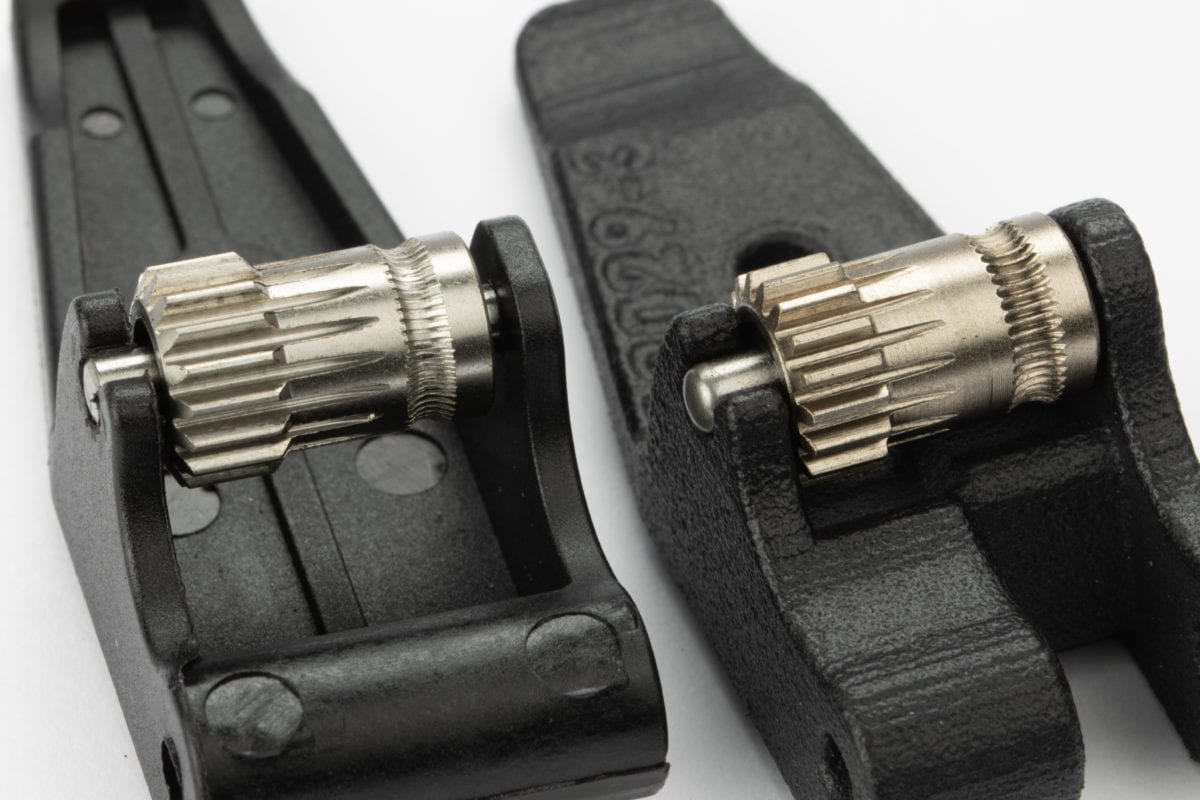
Clone to the left. Bondtech to the right.


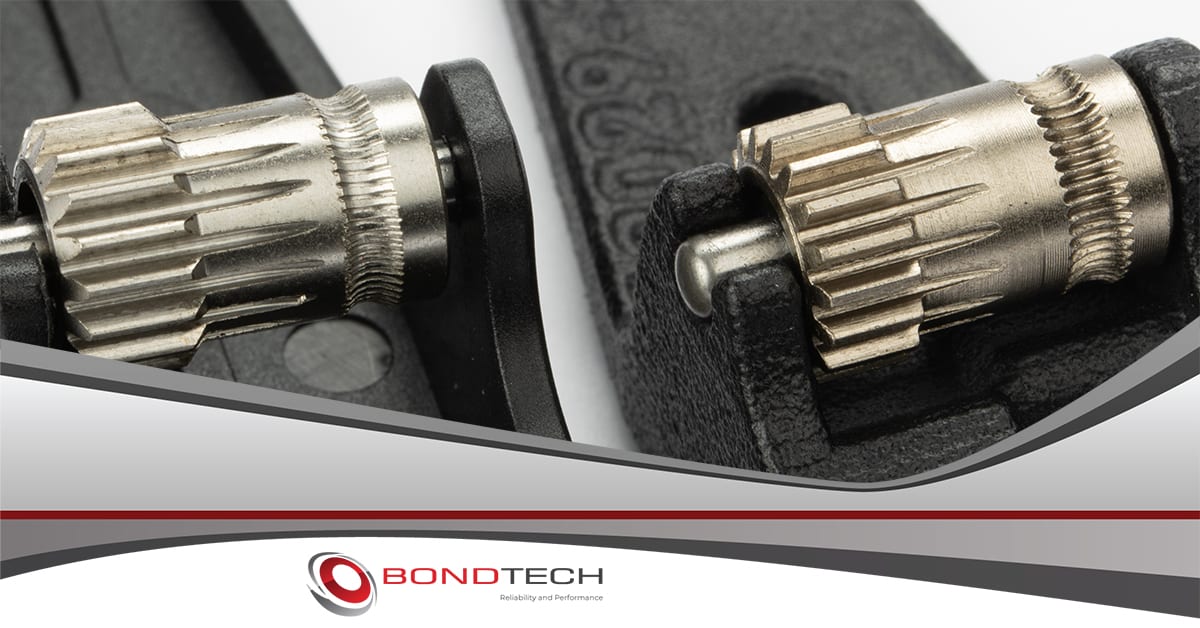
Secondary Drive Gear

Here we call your attention to the big differences on the secondary drive gear especially in what regards to the machining. The filament pushing teeth definition and profile are so different, and actually are one of the reasons for the huge performance gap.

This explains the reports we received that the clones tear through the filament; create much plastic debris; and are highly unreliable.


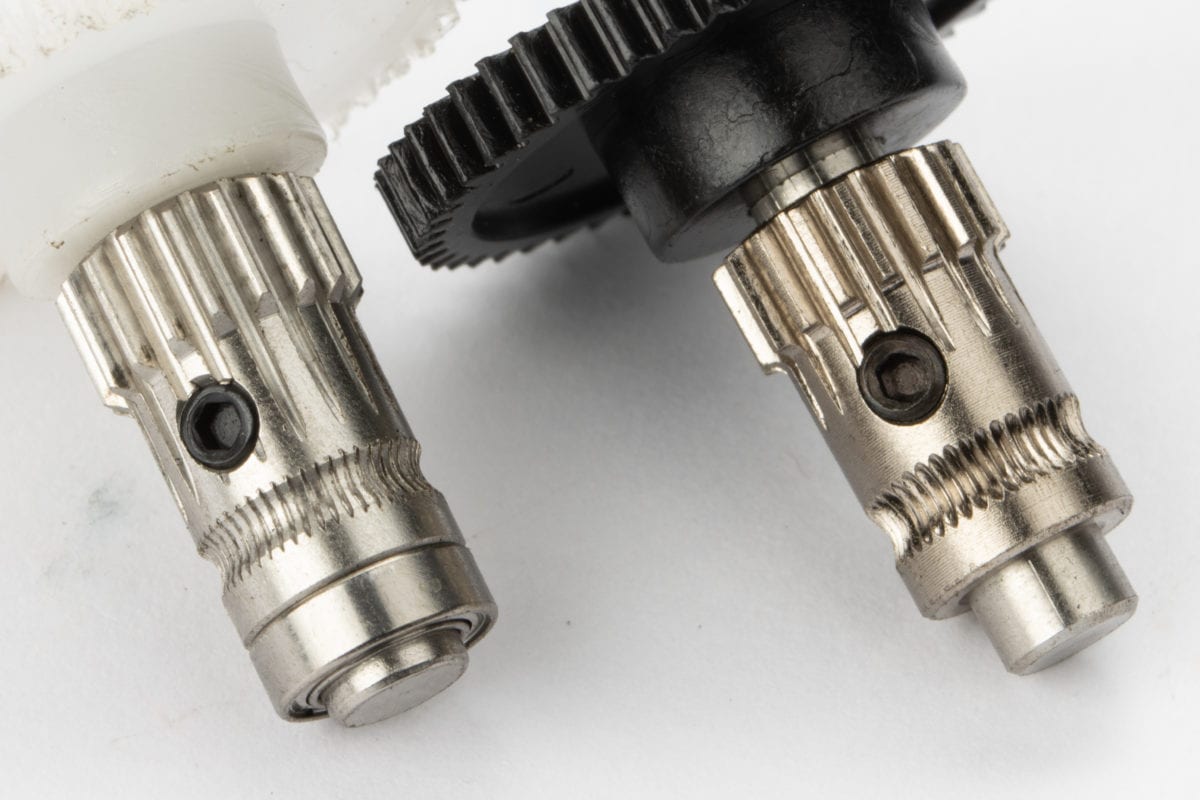
Clone to the left. Bondtech to the right.


The damage shown in the clone’s main gear teeth (white POM gear on image above and below) was caused by user error. Not by manufacturing or material quality, to be fair.

This damage is caused by installing the motor gear into the main shaft using the wrong orientation and distance.


Primary Drive Gear

Here we call your attention to the big differences on the primary drive gear. Again, the filament pushing teeth definition of our BMG™ is much higher, and we have a better profile that allows the gear teeth to embrace and push the filament strong and gently.

A note here to the difference in colour between both gears. Our slightly yellowish colour is caused by:

  • the heat treatment first, done to harden the steel;
  • the final Nickel coating, done to provide extra protection against corrosion, erosion, and abrasion.

We did the file scratch test on both gears.
The clone got scratched. Ours didn’t.
The clone’s gears are not hardened.


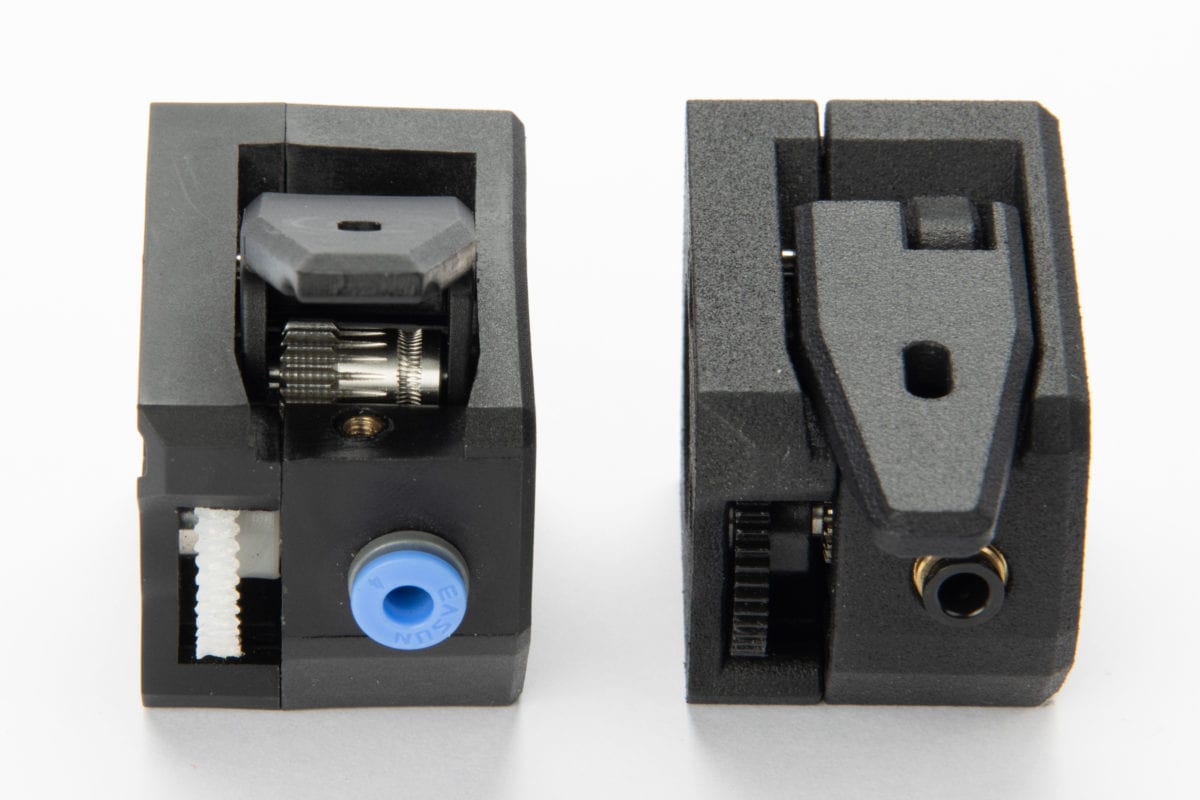
Clone to the left. Bondtech to the right.


Housing and overall construction

The housing of the clone, although manufactured with injection moulding, has many flaws. Let’s highlight the top 2.

We can immediately see #1. It’s illustrated by the warped edges, and uneven surfaces. It looks clunky and cheap.

#2 was unexpected (or was it?).
The hinge cannot close without pressure, because the teeth of the secondary drive gear collide with the front housing!!!


If you want to use high quality extruders in your 3D printer

Buy the original Bondtech Mini Geared, from Bondtech.

You will use a durable and reliable product that will increase the value and performance you get from your 3D printer.

CLICK HERE to buy


The Bondtech Mini Geared BMG™ is light; heat resistant; can be used in both Bowden or Direct Drive setups; and we have multiple variations available, including:

  • Standard and Mirrored;
  • BMG-M for Mosquito hotends, one of, if not, the best hotends in the market;
  • BMG-X2 and BMG-X2-M, for dual extrusion setups.

CLICK HERE to browse our extruders


Want to know more?

Register yourself or login to leave a Question, Reply or Comment in the section below.

If you didn't already, you can also subscribe to our newsletter to receive the short updates about our new products, updates or technology on your mailbox.

Thank you : )

Bondtech and 3D Solex strategic cooperation and integration

Historical agreement is signed

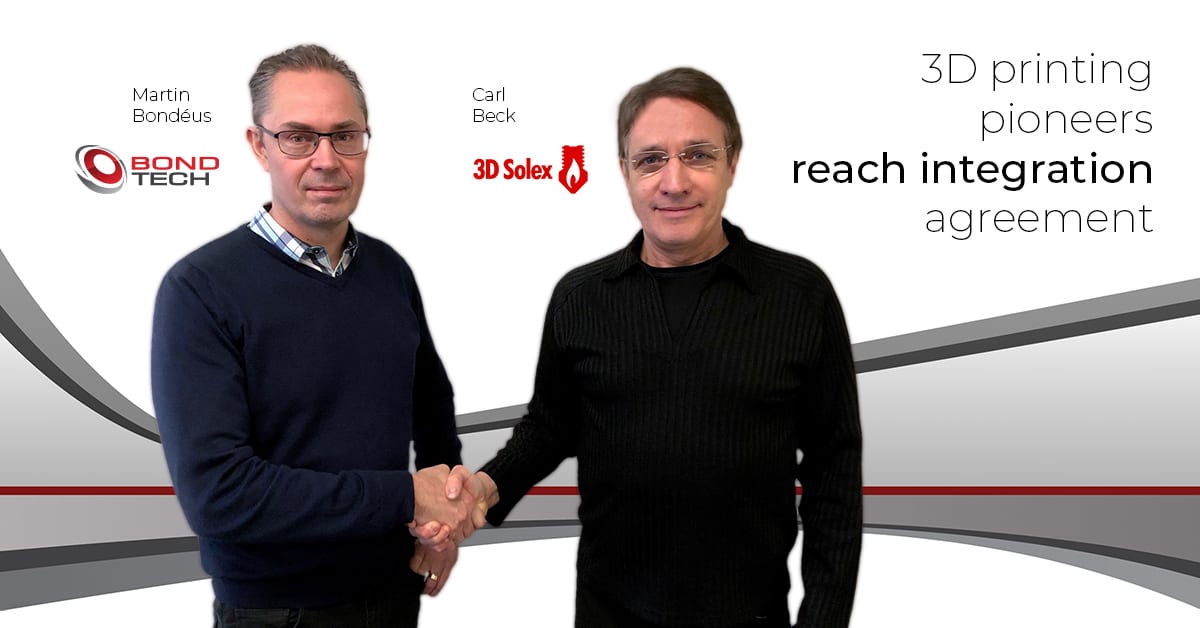
Bondtech (Sweden) and 3D Solex (Norway) have signed, last 14th of January, an agreement for strategic co-operation and future integration.

The agreement was signed by Martin Bondéus, on behalf of Bondtech AB, and by Carl Beck, on behalf of Cepta AS, respectively owners of Bondtech and 3D Solex.


The aim of the agreement is to fuse the R&D, manufacturing, product portfolio, marketing and sales channels by implementing the following steps:

  1. closer integration of technologies with cost and performance benefits;
  2. fusion of R&D – legacy, present and future – enjoying shorter time to market for new products and systems;
  3. further upscaling of in-house manufacturing assets to radically save on product and systems development iterations;
  4. over time totally fusing manufacturing and sales channels.


“To 3D Solex, this alliance means we can focus more on bringing to market great new products to make 3d printing faster, safer and more reliable!” Carl Beck, Jan 2020

Under this agreement Bondtech will start manufacturing and distribution of 3D Solex’s world acclaimed nozzles for filament 3D printers. 3D Solex’s product portfolio will be added to Bondtech’s webshop, under the Bondtech brand.
This integration will be done step by step, adding product ranges as they start to be documented and manufactured by Bondtech.

“We are very excited about this agreement with 3Dsolex because it lead us one step closer to our goal of being an one stop manufacturer and supplier of filament 3D print heads. ” Martin Bondéus, Jan 2020


As you may know, 3D Solex is a nozzles manufacturer from Norway with a wide spread of products and a high quality track record.
Nozzles from 3DSolex especially target Ultimaker, Prusa and Raise3D units.
Main focus is on increased durability, print speed and application flexibility.


Want to know more?

Register yourself or login to leave a Question, Reply or Comment in the section below.

If you didn't already, you can also subscribe to our newsletter to receive the short updates about our new products, updates or technology on your mailbox.

Thank you : )

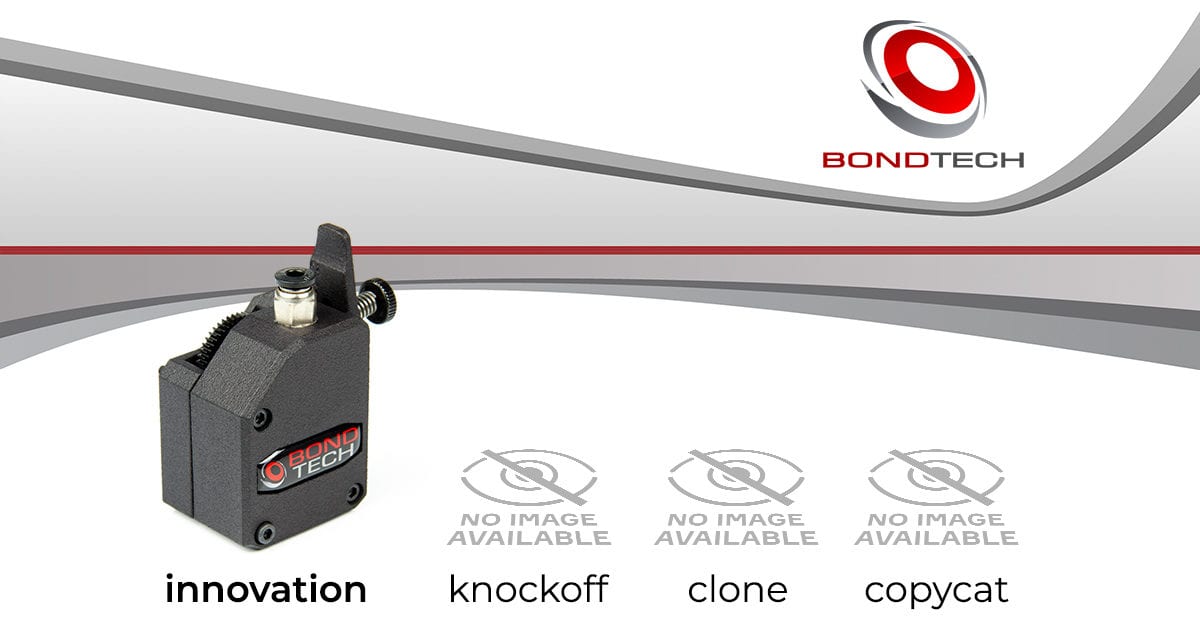
The knockoffs, the clones and the copycats

Questions are popping in people’s minds

We have received in the last weeks many questions that seek for explanation regarding the BMG clones and look-a-likes in the market. This post is aimed to give answers to everyone at once.


The Knockoffs

All Bondtech Extruders and Extrusion Upgrade Kits are manufactured in Sweden at Bondtech facilities in Värnamo.

We have no licensing agreement with any other company, in Sweden or elsewhere, that allows them to manufacture and sell Bondtech products.

If you see a Bondtech extruder being sold outside our website and Sales Partners network, almost surely is a counterfeit product. A knockoff.

Laws are different everywhere but in general, selling or knowingly buying counterfeit products is illegal. We will not pursue people buying knockoffs but the same cannot be said about sellers.


The Clones

In the beginning we had to chase some shady manufacturers selling counterfeit Bondtech extruders. Later they corrected their stance and rebranded their products, while keeping the same build and visual appearance.

Although they are called clones, in fact those are not exact replicas of our extruders. There are some small differences, big enough to result in lower reliability and performance.

We believe it comes without saying that we do not give Customer Support to people buying extruder clones. That support should be asked to whom sold the product.


The Copycats

The Dual Drive extrusion system from Bondtech was a great idea, and still is. Imitation flooded in waves. After the stage of knockoffs, came the war of the clones. Now we are facing the battle of the copycats.

Rather than creating something new to benefit the users, the copycat takes someone else’s idea, and presents it in a different package.

Metallurgy as a technology has more than 6000 years and keeps evolving. FDM was officially born in 1989. One can say filament 3D printing is still a newborn technology. For that reason there is so much to create anew, to innovate on. Hard to understand the waste of time and resources it is, to just copy.


So what is the real difference?


Bondtech BMGx2 Dual Extruder CC 20.00


Our products are not for everyone only because there is a price to pay as effect of the way we manufacture. Not everyone can pay for it, and we understand that. We cannot fault anyone for buying a copy when our price exceeds their budget.

We also feel some sympathy for the workers that are paid crumbles per unit and feel the urge to rush and make as many units per day as possible, so they can make ends meet. Although that certainly lowers the price of a product, it has big implications on the non quality ratio and it creates a game of chance for the customer.

At Bondtech we don’t rush production, and all our units are reviewed or tested. This takes time but lowers our non quality rate to about 0,25%. This means that statistically only 1 out of 400 Bondtech extruders will show a manufacture defect.


For most industries an acceptable rate of defects is to match the Sigma 3 standard, meeting 93.3% accuracy. This translates into nearly 27 out of 400 units being defective is acceptable. Rushed workers will fail even more. No good odds indeed.

At Bondtech these… odds, are unacceptable. We surpass by far the Sigma 4 standard of 99.4% accuracy. It takes a lot of work to make our customers that lucky.


Our price is also much influenced by the cost of the SLS 3D printing process. It highly increases the cost on all our products using SLS. Nevertheless, the black dyed PA12 parts made our brand building style. The parts are extremely light, robust and also heat resistant up to 100º Celsius.

We cannot stress too much when we mention Customer Support also factors into our costs. The dedication of the team, including Bondtech’s founder, is unique. Much time is spent helping customers to solve their issues, on and off the clock, most of the times without direct connection with the extruders themselves.

The last difference in this equation is innovation. We invest resources in technology and innovation, as we are investing now, in the pursuit of creating something new. A step forward that will bring added value to our customers and community, but also added trust to people’s believe in additive manufacturing as a production technology.


Want to know more?

Register yourself or login to leave a Question, Reply or Comment in the section below.

If you didn't already, you can also subscribe to our newsletter to receive the short updates about our new products, updates or technology on your mailbox.

Thank you : )